
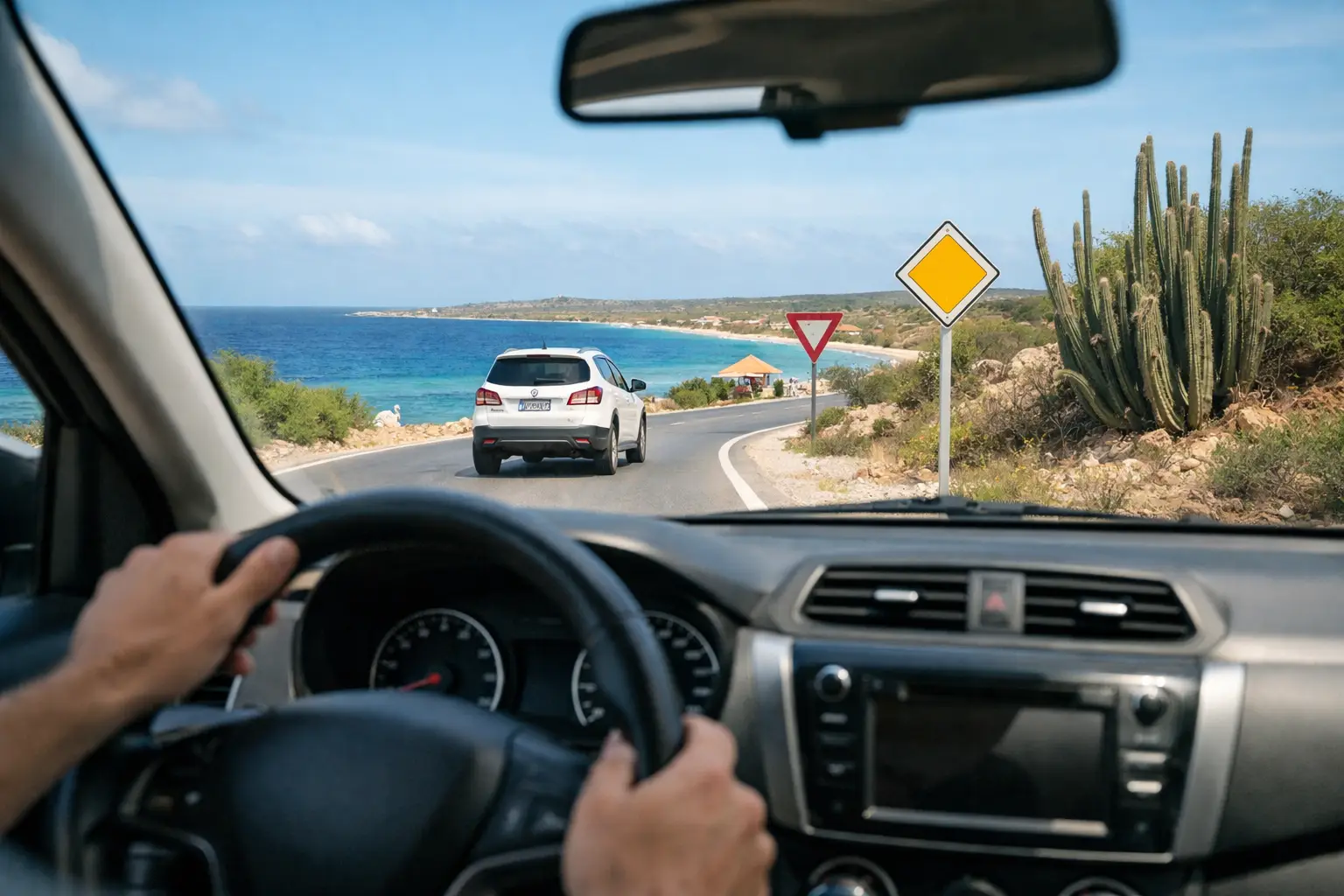

The first surprise for many visitors is how easy driving in Bonaire feels once you know what to expect. The roads are generally straightforward, traffic is light compared with most US cities, and getting around by car gives you the freedom to reach dive sites, beaches, town, and the quieter parts of the island on your own schedule. What catches people off guard is not heavy traffic. It is the little local differences.
That is where a solid Bonaire driving rules and road signs guide helps. A few simple habits can save you from wrong turns, rough-road mistakes, and the kind of small traffic issues that can interrupt an otherwise great vacation.
Bonaire driving rules and road signs guide for visitors
Bonaire follows right-hand traffic, so you drive on the right side of the road, just as you would in the US. For most American travelers, that makes the adjustment easy from the moment you leave the airport.
You will still want to stay alert during your first day, especially if you are tired from travel. Road layouts can feel more relaxed than what many visitors are used to, and not every area has the same level of markings or lighting. In town, things are simple and slower. Outside the busier areas, roads can become rough, unpaved, or narrow pretty quickly.
Seat belts should be worn, and basic safe driving rules apply exactly as you would expect. Keep your speed reasonable, avoid using your phone while driving, and never assume the road surface ahead will stay the same. Bonaire rewards careful drivers more than aggressive ones.
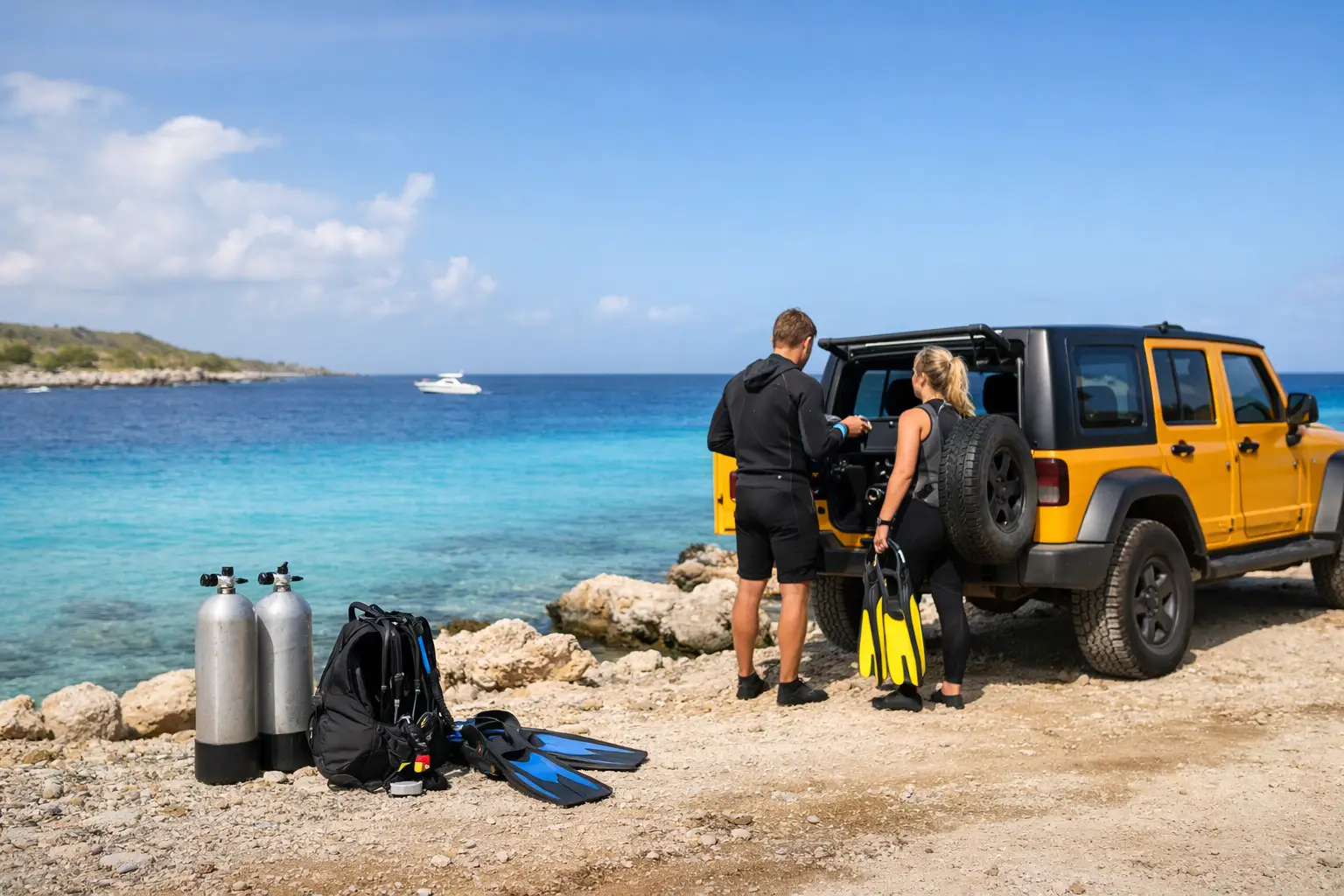
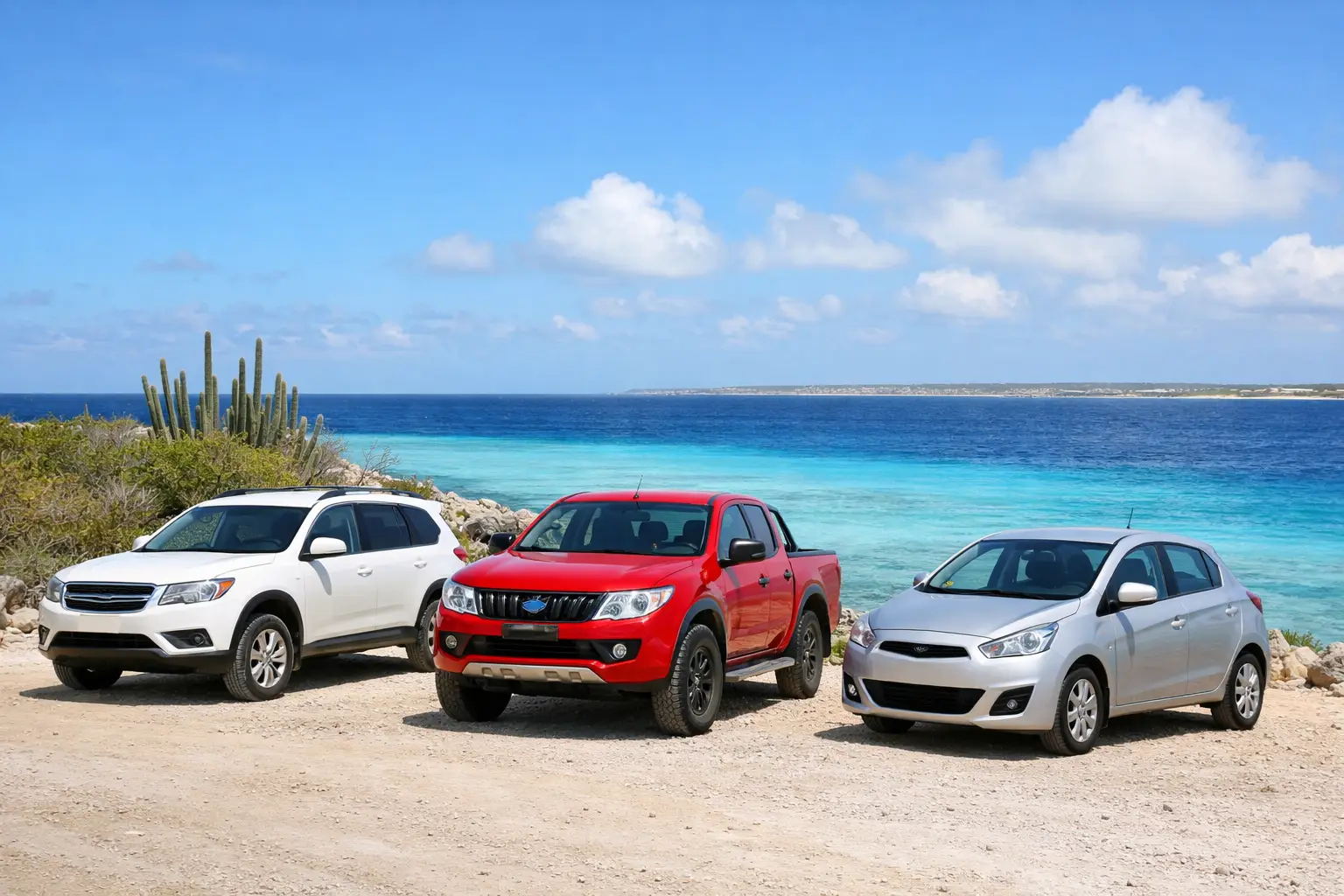
One more practical point – if your trip includes shore diving or a visit to Washington Slagbaai National Park, the right vehicle matters almost as much as knowing the rules. Some roads are perfectly fine for a standard car, while others are much better suited to a pickup, SUV, or 4×4. It depends on where you plan to go and how much gear you are carrying.
Speed limits and everyday road behavior
Posted speed limits should always be followed, but many visitors notice that Bonaire driving is more about road awareness than fast movement. Speeds are generally modest, and that is a good thing. You may come across cyclists, scooters, pedestrians, wandering animals, and drivers slowing suddenly to turn into homes, dive areas, or small side roads.
In residential and town areas, take it slow even if the road looks open. Near schools, neighborhoods, and local businesses, slower is smarter. On open stretches, it can be tempting to pick up speed, but surfaces can change and potholes are not unusual in some areas.
If you are heading to remote dive spots, build in extra time instead of rushing. That small shift in mindset makes driving here much easier. Bonaire is not a place where shaving five minutes off a drive improves your day.
Common road signs in Bonaire
Most signs are intuitive, and many are similar to European or international road signage. Even if the language on a sign varies, the symbols usually tell the story.
You will commonly see stop signs, directional signs, parking restrictions, speed limit signs, and warning signs for curves, uneven roads, or crossings. Give-way or yield signs matter, especially at intersections where traffic flow may not feel obvious at first glance.
A few signs deserve extra attention. Signs warning of rough roads are worth taking seriously, particularly if you are in a smaller car. Signs related to protected areas or park access should not be ignored either, as road conditions can change from paved to rugged without much transition.
If you are unsure what a sign means, the best approach is the simplest one – slow down, look around, and proceed cautiously. On Bonaire, defensive driving usually solves the uncertainty.
Stop and yield signs
Stop signs should be treated as full stops, not rolling pauses. At smaller intersections, especially in quieter areas, it may feel like no one is around. Still stop fully. Local drivers expect that.
Yield signs are just as important. If another vehicle is already moving through the intersection, let it go. Taking an extra second is always better than forcing your way through and creating confusion.
Parking signs
Parking in the wrong place is one of the easiest mistakes for visitors to make. In busy areas near Kralendijk, the waterfront, or popular businesses, pay attention to posted restrictions and curb markings.
Do not assume that an open patch near a road is automatically fine for parking. Some areas need to stay clear for access, deliveries, or local traffic. Near dive sites, keep your vehicle well off the road and out of the way without blocking entrances or pathways.
Warning signs for road conditions
This is one of the biggest differences from driving in a typical US suburb. Warning signs for bumps, dips, loose surfaces, and uneven roads are there for a reason. Bonaire has plenty of beautiful places that are not reached by smooth pavement.
If the road ahead looks rough, treat it that way immediately. Slow down before you hit the bad section, not after. That is better for safety, comfort, and the vehicle.
Right-of-way, roundabouts, and intersections
Intersections in Bonaire are usually uncomplicated, but you should not drive on autopilot. Some are clearly marked and others are more informal in feel. If signage is present, follow it closely. If it is not immediately clear, slow down and watch what other traffic is doing.
Roundabouts can also appear during your island driving. Vehicles already in the roundabout generally have the right-of-way, so yield before entering. Use your turn signal when exiting if appropriate and keep your pace calm.
This is one of those areas where local rhythm matters. Drivers are not usually trying to beat each other. A patient, predictable style works best.
Night driving in Bonaire
Night driving is possible and often easy near the main developed areas, but it requires more caution outside town. Lighting can be limited, road edges may be harder to see, and animals can appear unexpectedly.
If you are returning from dinner, a sunset stop, or an evening out, keep your speed down and stay focused. This is especially true on less-developed roads and near dive access points. If you are unfamiliar with the route, daytime is always the easier time to learn it first.
For visitors planning a lot of after-dark driving, a clean, well-maintained vehicle with strong lights makes a difference. It is one of those details people appreciate more once they are on the island.
Special advice for dive trips and park driving
A standard car can handle many everyday drives around Bonaire just fine. But not every island road is the same, and not every vacation looks the same.
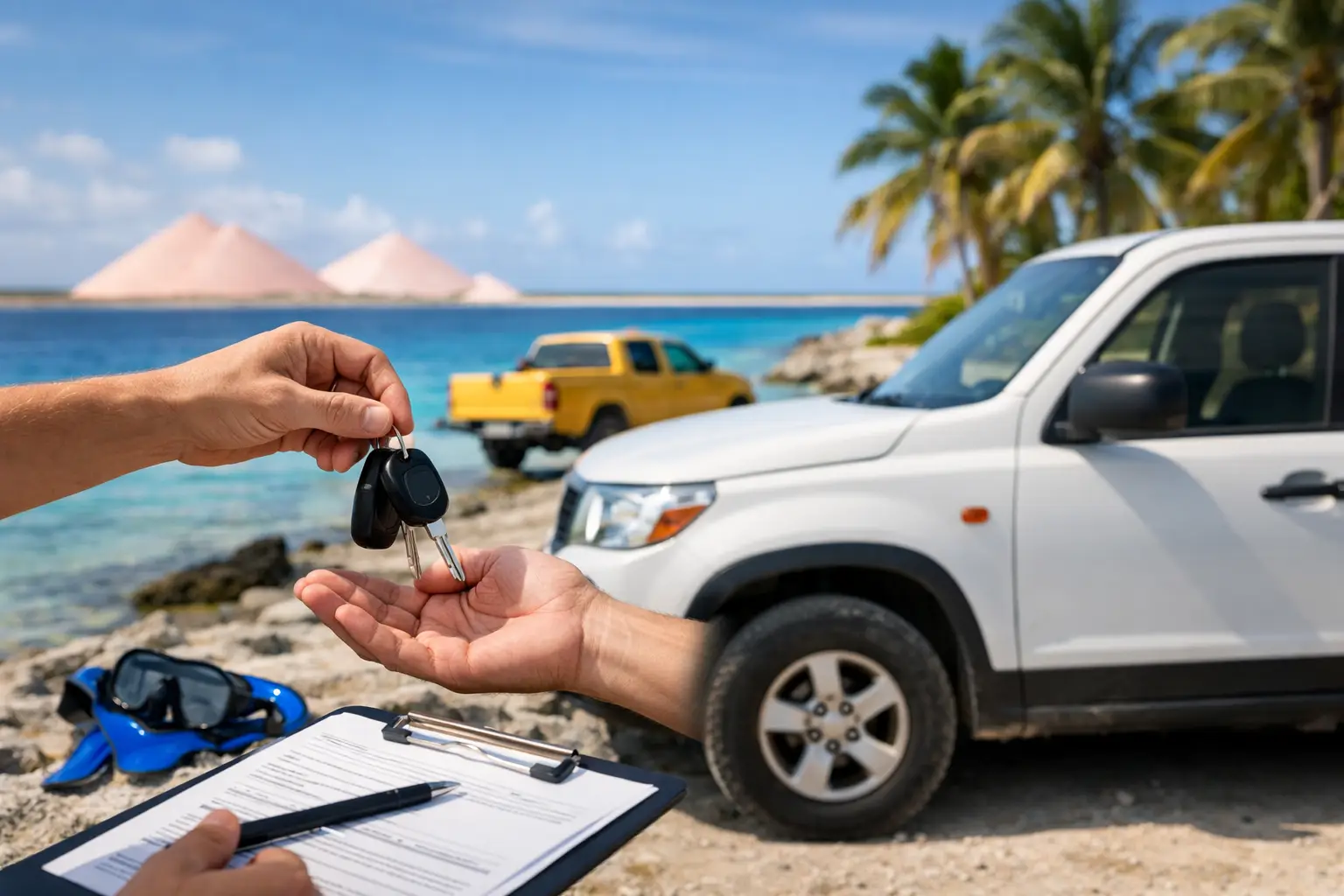
If you are carrying tanks, wet gear, coolers, and multiple people, extra space quickly becomes more than a luxury. If your plans include repeated shore diving or rougher access roads, a pickup or SUV often makes the trip easier. For Washington Slagbaai National Park, road conditions can be rugged enough that choosing a more capable vehicle is simply the smarter call.
That does not mean everyone needs the biggest option. It means matching the vehicle to the way you want to explore. That is usually the difference between a smooth day and an unnecessarily stressful one.
Practical mistakes visitors can avoid
The most common driving problems in Bonaire are not dramatic. They are small, preventable issues. Visitors drive too fast on unfamiliar roads, underestimate rough terrain, miss a parking restriction, or assume every route is suited to every vehicle.
Another easy mistake is leaving valuables visible in the car, especially at beaches or dive sites. Keep the vehicle tidy and avoid displaying anything that attracts attention. A little caution goes a long way.
It also helps to ask local questions before heading out. A quick conversation about road conditions, parking, or which vehicle best fits your plans can save time and hassle later. That is one reason many travelers prefer working with a local company like Caribe Car Rental Bonaire rather than treating transportation as an afterthought.
A simple mindset for safer driving
If there is one rule that makes every other rule easier, it is this – do not rush. Bonaire is best enjoyed at a steady pace. Watch the signs, respect the road conditions, and give yourself a little extra time between stops.
That approach keeps things simple whether you are heading to a dive site at sunrise, driving into town for dinner, or spending the day exploring the island beyond the main roads. Drive with patience, and Bonaire tends to return the favor.
 EN_CA
EN_CA  EN
EN  NL
NL