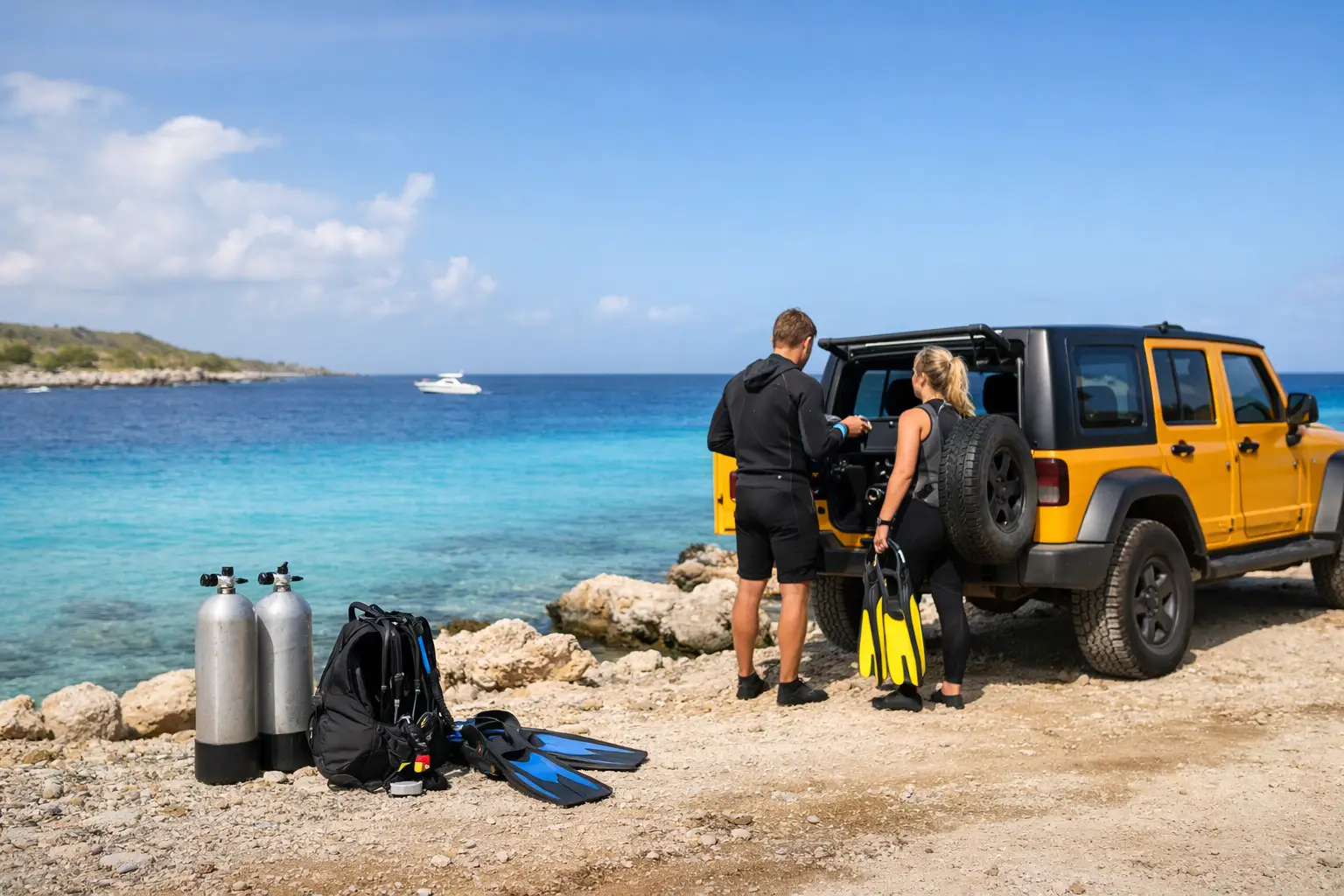
If your Bonaire dive day starts with tanks clanking in the back, a yellow stone marker on the roadside, and a quick check for fins before sunrise, then Bonaire dive site access by vehicle is not a small detail. It shapes your whole trip. The right vehicle makes shore diving easier, faster, and far less tiring. The wrong one can turn a simple two-tank morning into a lot of lifting, shuffling, and second-guessing.
Why Bonaire dive site access by vehicle matters
Bonaire is built for independent divers. That is part of the island’s appeal. You are not waiting on a boat schedule or organizing your whole day around a group departure. You load your gear, pick your site, park near the entry, and go when conditions look good.
That freedom only works well if your vehicle fits the job. Many dive sites are easy to reach from paved roads, but easy to reach is not always the same as comfortable to use. When you have tanks, BCDs, wetsuits, cameras, snacks, towels, and two people trying to keep everything dry enough for the ride back, space matters. Ground clearance can matter too, depending on where you plan to go and how many sites you want to cover in one day.
For most visiting divers, the goal is simple. You want a vehicle that keeps shore diving practical without overpaying for capability you may not need.
What the roads are really like around dive sites
A lot of Bonaire’s popular shore dive sites are accessed directly from the coastal road, with parking areas or pull-offs close to the water. For southern sites, driving is usually straightforward. You can cover several spots in one outing without needing anything extreme.
The picture changes a bit as you move north or head toward rougher stretches. Some access roads are uneven, rocky, or dusty. After repeated trips with wet gear and tanks, that wear-and-tear starts to feel more noticeable in a small passenger car. You may still get there, but loading and unloading can be less convenient, and you will feel every bump.
That is why there is no one-size-fits-all answer. If your plan is relaxed diving on easier-access sites near town, a standard vehicle may be enough. If you want more room for gear, easier tank handling, and better comfort on rougher access roads, a pickup or SUV tends to be the better call.
Best vehicle choices for divers
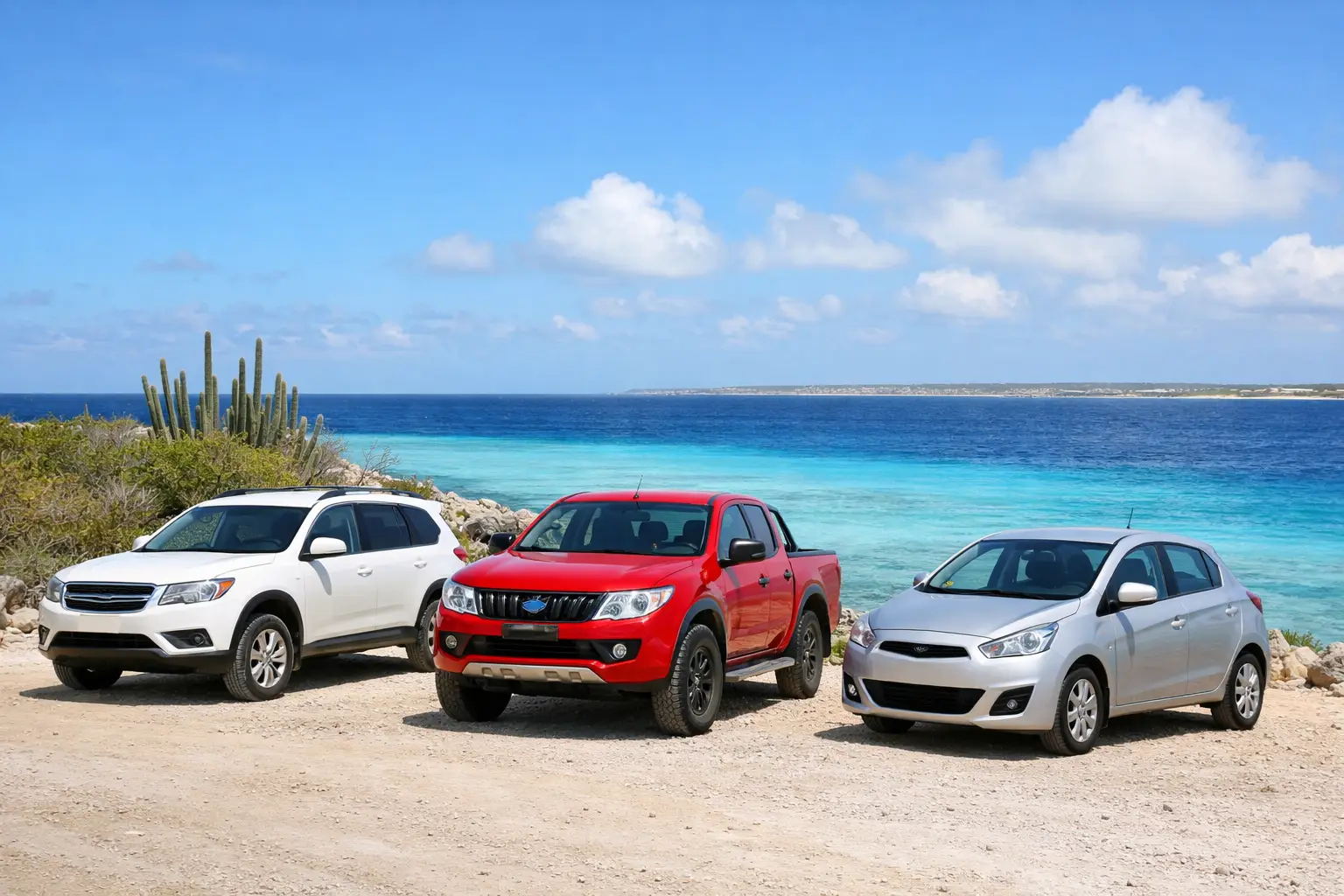
For Bonaire dive site access by vehicle, pickups are the most natural fit for many dive travelers. There is a practical reason for that. Tanks and wet gear are easier to load into a truck bed than into a trunk or back seat, and you are not packing damp equipment into the same cabin where you will sit for the rest of the day. That alone makes a difference by day two or three.
An SUV can also work very well, especially for couples or small families who want enclosed storage and a more comfortable ride. This is often a strong middle ground if you are mixing dive days with dinners in town, sightseeing, or beach stops and want one vehicle that covers everything.
Economy cars and sedans can still make sense for lighter travel. If you are diving selectively, carrying minimal gear, or relying on tanks and support close to your preferred sites, you may not need the extra size. The trade-off is space and convenience. A smaller car asks you to pack more carefully, protect the interior from wet gear, and think twice before loading up for a full day of multiple shore entries.
If Washington Slagbaai National Park is on your itinerary in addition to diving, that is where a 4×4 or more capable truck becomes much more attractive. Not every visitor needs that level of capability, but some absolutely do.
How to match the vehicle to your dive plan
The easiest way to choose is to be honest about how you actually travel. Divers often picture a simple beach setup, then arrive with far more equipment than expected. Add rinse buckets, dry bags, camera housings, extra water, and a second set of tanks, and your packing needs change quickly.
If you are traveling as a couple and both of you are diving every day, a pickup usually keeps things easy. If you are traveling with friends and sharing tanks, fins, and bags, go bigger sooner rather than later. Vacation days on Bonaire are too valuable to spend reorganizing a cramped car between dives.
If one person dives and the other is along for beaches, lunch, and island exploring, an SUV often feels like the best balance. It keeps enough room for dive logistics while staying comfortable for non-dive parts of the trip.
Practical loading and parking tips
On Bonaire, efficient dive days come down to routine. Keep the heavy items stable and low. Make sure tanks are secure so they do not roll or knock into other gear. Separate dry clothes from wet equipment before the first dive, not after the second one when everything is already mixed together.
When you park at shore sites, think about the return as much as the entry. After a dive, you will be wet, possibly tired, and carrying more than you want. Parking close enough to reduce long gear hauls helps. So does having a vehicle layout that lets you drop equipment in quickly instead of repacking the whole car after every dive.
It is also smart not to leave valuables visible in the vehicle while you are underwater. That advice applies anywhere, but it matters more when your car is unattended at a roadside site.
What first-time visitors often underestimate
The biggest surprise for many first-time Bonaire divers is how much driving becomes part of the dive experience. This is not just transportation between hotel and beach. Your vehicle is your staging area, gear locker, snack stop, changing room, and between-dive recovery space.
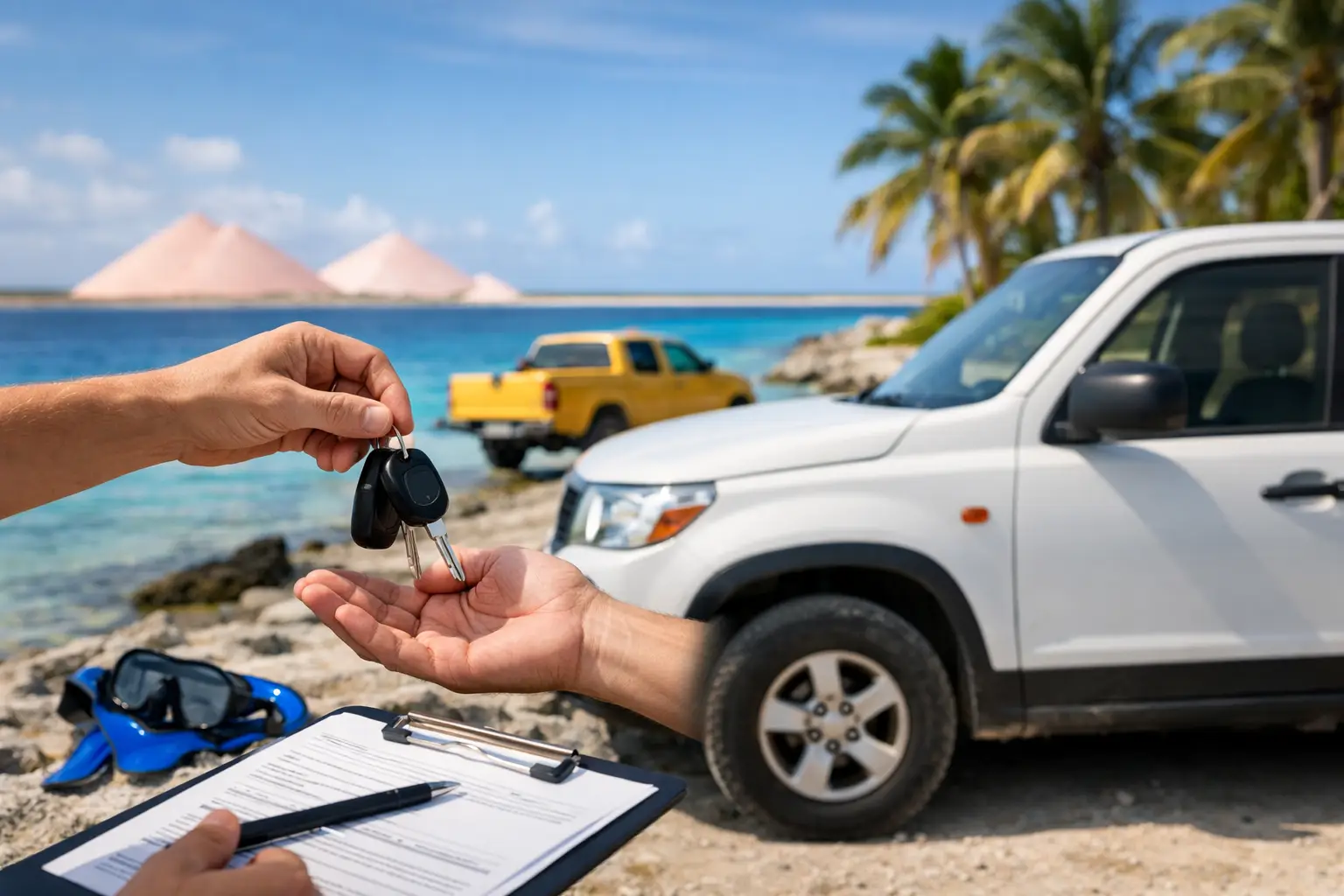
That is why clean, reliable vehicles matter. So does a simple pickup process. After a flight, nobody wants to stand at a crowded counter and sort through confusing add-ons before even reaching the water. A smooth arrival, a vehicle that suits the island, and local advice from people who know Bonaire make the first 24 hours much easier.
This is exactly where a local rental partner can help. Caribe Car Rental Bonaire focuses on the kinds of vehicles visitors actually need for island exploring, dive logistics, and park access, with a simple process and free airport transfers that take some stress out of arrival day.
When a pickup is worth the extra cost
Not every diver needs a truck, but many are happier with one once the trip starts. The extra cost usually pays off in convenience rather than speed. Easier tank loading, more room for fins and bags, less worry about wet gear in the cabin, and better comfort on rough access roads all add up.
If you are diving most days, carrying your own equipment, or planning to sample sites across the island, a pickup is often money well spent. If your trip is lighter on diving and heavier on dining, town driving, and short outings, an economy car or SUV may be the smarter value.
That is the real trade-off. It is not about picking the biggest vehicle available. It is about choosing the one that makes your specific trip easy.
A few route and timing realities
Morning conditions are often a big reason divers head out early, which means your vehicle needs to be ready for quick starts and repeated short runs. Good air conditioning matters more than people expect once you finish a warm shore dive and want to cool down before the next stop.
It also helps to keep your schedule flexible. One of the best parts of Bonaire is being able to change plans based on wind, current, or how crowded a site looks. With the right vehicle, changing sites is simple. Without enough room or capability, every change feels like extra work.
Choosing for comfort, not just access
Technically, many Bonaire dive sites can be reached with a basic vehicle. But access is only half the question. The better question is how you want the day to feel.
Do you want to wrestle wet gear into a small trunk after every shore entry, or toss it into a setup built for active days? Do you want to skip a site because the road looks rougher than expected, or keep your options open? Those are the practical choices behind Bonaire dive site access by vehicle.
Pick the vehicle that gives you room to enjoy the island, not just reach it. Bonaire is best when your day stays simple from the first tank to the drive back at sunset.
 EN_CA
EN_CA  EN
EN  NL
NL