
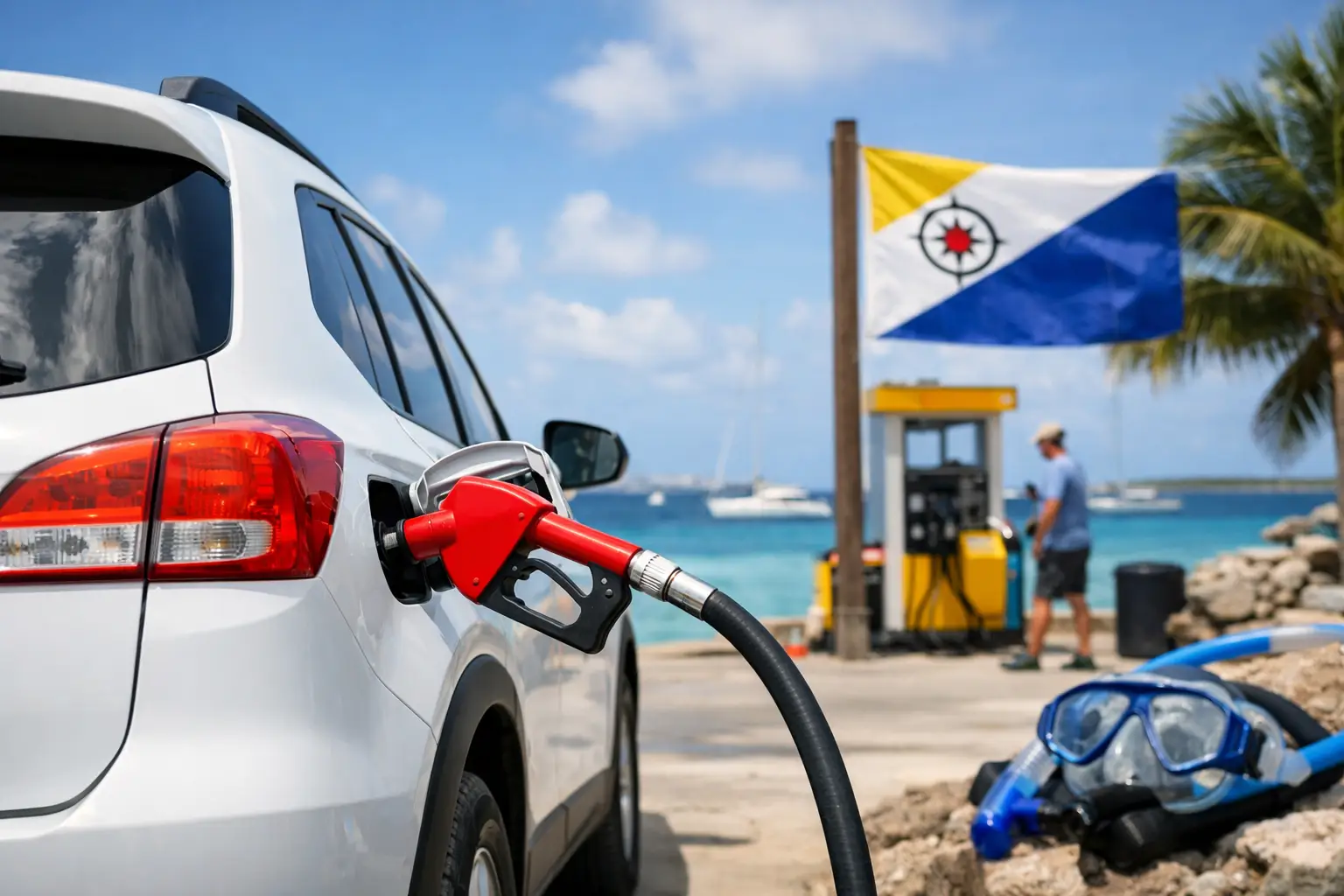

You land on Bonaire, grab your bags, and the last thing you want is a surprise at the rental counter about gas. That is exactly why a bonaire rental car fuel policy explained in plain English matters. A simple fuel rule can save you time, avoid return-day stress, and keep your vacation budget where it belongs.
On a small island, fuel policy should be simple. Usually, it is. But travelers still get tripped up by one detail: what level was in the tank when they picked up the car, and what level does the company expect when they bring it back? If you know that answer before you drive away, the rest is easy.
What a Bonaire rental car fuel policy explained really means
In most cases, Bonaire rental fuel rules are more straightforward than what many travelers see at large airport brands in the US or Europe. You are not dealing with complicated prepaid fuel offers, hidden service fees, or vague language buried in fine print. The policy is usually based on one practical idea: return the vehicle with the same amount of fuel it had at pickup.
That could mean full-to-full, which is the easiest version to understand. You receive the car with a full tank and bring it back full. It could also mean quarter-to-quarter or half-to-half if the vehicle was not handed over completely full. The important part is not the label. The important part is the match.
That is why it helps to check the fuel level before leaving the lot or airport handoff. If the gauge shows three-quarters, that should be noted. If it is full, even better. A good local rental company will make this clear at pickup so there is no guessing later.
The most common fuel policy on Bonaire
Full-to-full is usually the cleanest option
For most vacation renters, full-to-full is the fairest setup. You only pay for the fuel you actually use. There is no markup on unused gas, and no need to estimate how much driving you will do. If you spend the week visiting dive sites, going into town for dinner, and taking a day trip across the island, you simply refill before return.
This policy also works well on Bonaire because distances are short. Even if you explore a lot, you may use less fuel than you would on a mainland trip. Paying in advance for a full tank often makes less sense on an island where your total mileage can stay relatively low.
Same-to-same can happen too
Some rentals are handled on a same-to-same basis instead. That means whatever level you start with is the level you return with. This is not a bad policy – it can be perfectly reasonable – but it leaves more room for misunderstanding if nobody confirms the starting level carefully.
If you are renting for several days, snapping a quick photo of the dashboard at pickup is a smart move. Not because problems are common, but because it removes any uncertainty.
Why fuel policy matters more than people expect
Fuel policy sounds minor until you are trying to catch a flight, the tank is lower than you thought, and you are looking for a gas station with dive gear still in the back. Most rental frustration does not come from the fuel itself. It comes from poor timing and unclear expectations.
A clear policy helps in three ways. First, it protects your budget because you avoid refueling charges. Second, it protects your schedule because you know whether you need a gas stop before drop-off. Third, it gives you confidence that the rental process will stay as easy at return as it was at pickup.
That matters even more for travelers who rent a pickup, SUV, or 4×4 for heavier use. If you are carrying tanks, shore diving gear, coolers, or heading toward rougher park roads, you may use more fuel than you would in a small economy car. The larger the vehicle, the more helpful it is to understand the return expectation from day one.
How to avoid extra fuel charges
The simplest way to avoid fuel charges is to treat the fuel gauge as part of your return checklist, just like checking for passports and sunglasses. Do not leave it for the last hour unless you enjoy unnecessary stress.
If your policy is full-to-full, refill close to the end of your rental. If it is same-to-same, give yourself a little margin. Fuel gauges are not precision instruments, and what looks like exactly half a tank while parked may read differently once the car is moving or parked on a slight incline.
It also helps to keep your last fuel receipt until the vehicle is checked back in. You may never need it, but it is useful proof of a recent fill-up if there is any question.
Watch the timing on your final day
This is where many travelers make life harder than it needs to be. Bonaire is relaxed. Departure mornings are not. Between packing, checking out, and getting to the airport, a fuel stop can feel bigger than it should.
If your flight is early, consider filling up the evening before if your hotel is nearby and you will only do minimal driving afterward. If you still need the car for dinner or one more beach stop, then top off on the way back the next morning. The best choice depends on your final-day schedule.
Bonaire driving habits and fuel use
Bonaire is not a place where most visitors rack up hundreds of miles a day. That can make fuel use seem almost too easy to ignore. But your trip style matters.
If you are mostly staying around resort areas, beaches, and restaurants near town, your fuel use will likely be modest. If you are driving north and south often, carrying dive gear, or using a pickup for more rugged exploring, expect the gauge to drop faster. A 4×4 trip into Washington Slagbaai National Park, for example, is a very different driving day than a short run to lunch and back.
Vehicle type matters too. Economy cars generally stretch fuel further. Pickups, SUVs, and 4×4 vehicles trade some efficiency for capability, cargo room, and the confidence to go where a smaller car should not.
Questions to ask at pickup
A good rental experience starts with clear answers, not assumptions. Before you drive off, ask what the fuel level is now, what level is expected at return, and whether there is a refueling charge if the car comes back short.
You can also ask where it makes the most sense to refuel before drop-off. A local team will usually point you in the right direction quickly. That kind of practical guidance is one of the advantages of renting from an on-island company that knows how visitors actually move around Bonaire.
If you are traveling with a group, make sure one person is responsible for the fuel plan. Too many return-day mix-ups happen because everyone assumes someone else handled it.
Fuel policy trade-offs travelers should know
There is no single fuel policy that is perfect for every renter. Full-to-full is usually the best value for travelers who do not want to overpay for unused gas. Prepaid fuel can occasionally be convenient for someone with a very tight departure schedule, but only if the price is fair and you expect to use most of the tank. On Bonaire, many renters simply will not burn enough fuel to make prepaying attractive.
Same-to-same is workable, but it depends more on accurate documentation at pickup. It is not worse, just slightly less foolproof.
The right policy comes down to what you value more: maximum simplicity, maximum fairness, or maximum speed on return. Most visitors want fairness and clarity. That is why straightforward fuel terms matter.
The easiest way to think about it
When you rent a car on Bonaire, think of the fuel policy as part of the service promise. It should be easy to understand, easy to follow, and easy to settle at return. If anything feels vague, ask before you leave.
At Caribe Car Rental Bonaire, that kind of clarity fits the way island rentals should work – friendly, practical, and hassle-free. You should be thinking about where to snorkel, where to dive, and whether you need a pickup or a compact car for the day, not wondering what the fuel gauge will cost you later.
A good rental company makes the rules clear. A smart traveler checks once, keeps it simple, and enjoys the island the rest of the time.





 EN
EN  NL
NL