


You can land in Bonaire, walk outside Flamingo Airport, and feel like you have two options: pay whatever is posted or spend hours hunting for a “deal.” The truth is simpler. Most price differences come from a handful of factors you can spot fast once you know what to look for.
This bonaire car rental rates comparison is built for real trip planning – diving days, beach hopping, grocery runs, and that one day you finally commit to Washington Slagbaai National Park. Rates matter, but what you’re really comparing is how well a vehicle matches your itinerary, and how many headaches you’ll avoid once you’re on island.
Bonaire car rental rates comparison: what you’re really comparing
On paper, two rentals can look identical: same dates, same “compact” category, similar daily rate. In practice, the total cost and the day-to-day experience can be very different.
A clean comparison means you’re lining up the same basics each time: what vehicle category you’re actually getting, what’s included (and what’s not), how pickup works, and what happens if your flight is delayed or plans change. If one quote is missing details, assume you’re not seeing the full picture yet.
The four biggest drivers of car rental pricing on Bonaire
Rates move for the same reasons you see in other destinations, but a few island realities make them more noticeable.
1) Seasonality and demand peaks
Bonaire’s busy season brings higher demand and fewer vehicles available, especially in the most practical categories for the island. If you’re traveling during peak weeks, the “best rate” is often the rate you locked in early – not the one you try to negotiate after landing.
If you have fixed travel dates, focus on booking sooner rather than chasing small day-rate differences across multiple sites. Availability is the silent price driver.
2) Length of rental
Daily rates usually get better as your rental gets longer. That’s not a trick – it’s how operators cover the fixed work around each rental (cleaning, inspection, scheduling, airport logistics). If you’re staying 7 to 10 days, compare the weekly total, not the daily number.
For shorter stays, don’t be surprised if a “cheap” daily rate isn’t dramatically cheaper than a mid-range option once you factor in convenience and inclusions.
3) Vehicle type and what it can handle
On Bonaire, vehicle choice isn’t about style. It’s about function.
An economy car can be perfect if you’re mostly staying near town, doing casual beach days, and you pack light. But if your trip includes lots of dive gear, multiple people, or rougher access roads, the vehicle category changes everything – including the rate.
Pickups and SUVs tend to cost more because they’re in higher demand with dive travelers and explorers. True 4×4 categories cost more for a reason: capability, maintenance, and limited supply.
4) What’s included at checkout
This is where comparisons get messy. A lower rate can become a higher total if you later add essentials like extra driver coverage, insurance, taxes/fees, after-hours handling, or transportation to and from the airport.
When you compare quotes, look for an “all-in” total for your dates, and confirm what you’ll pay on arrival. If the price is vague, you’re not comparing the same thing.
Comparing categories the way Bonaire visitors actually use them
The easiest way to choose is to start from your activities, not your budget. The right fit usually saves money indirectly – less stress, fewer changes mid-trip, and less time solving problems.
Economy cars: best for light, simple itineraries
If you’re a couple with one small bag each and you plan to stay close to Kralendijk with occasional beach runs, an economy car can be a smart value. You’ll typically see the lowest rates here.
The trade-off is space. Dive tanks, wet gear bins, and coolers add up quickly. If you’re diving daily, the “cheapest” car can start to feel like you’re playing Tetris in the parking lot.
Sedans: a little more comfort, a little more room
Sedans are often a middle ground for travelers who want comfort and a more planted feel on the road while still keeping rates reasonable. If you have two to four people and moderate luggage, a sedan can be a relaxed choice.
The limit is still cargo flexibility. Divers with bulky gear usually outgrow a sedan fast.
SUVs: for extra space and a more forgiving ride
SUVs make sense when you want cargo space without committing to a pickup. They can be especially helpful for families, groups, or anyone planning long days exploring the island.
Rates generally jump here compared to compacts and sedans, but you’re paying for capacity and comfort. If your group is splitting gear across multiple people, an SUV can prevent the “we need a second vehicle” conversation.
Pickup trucks: the Bonaire classic for divers
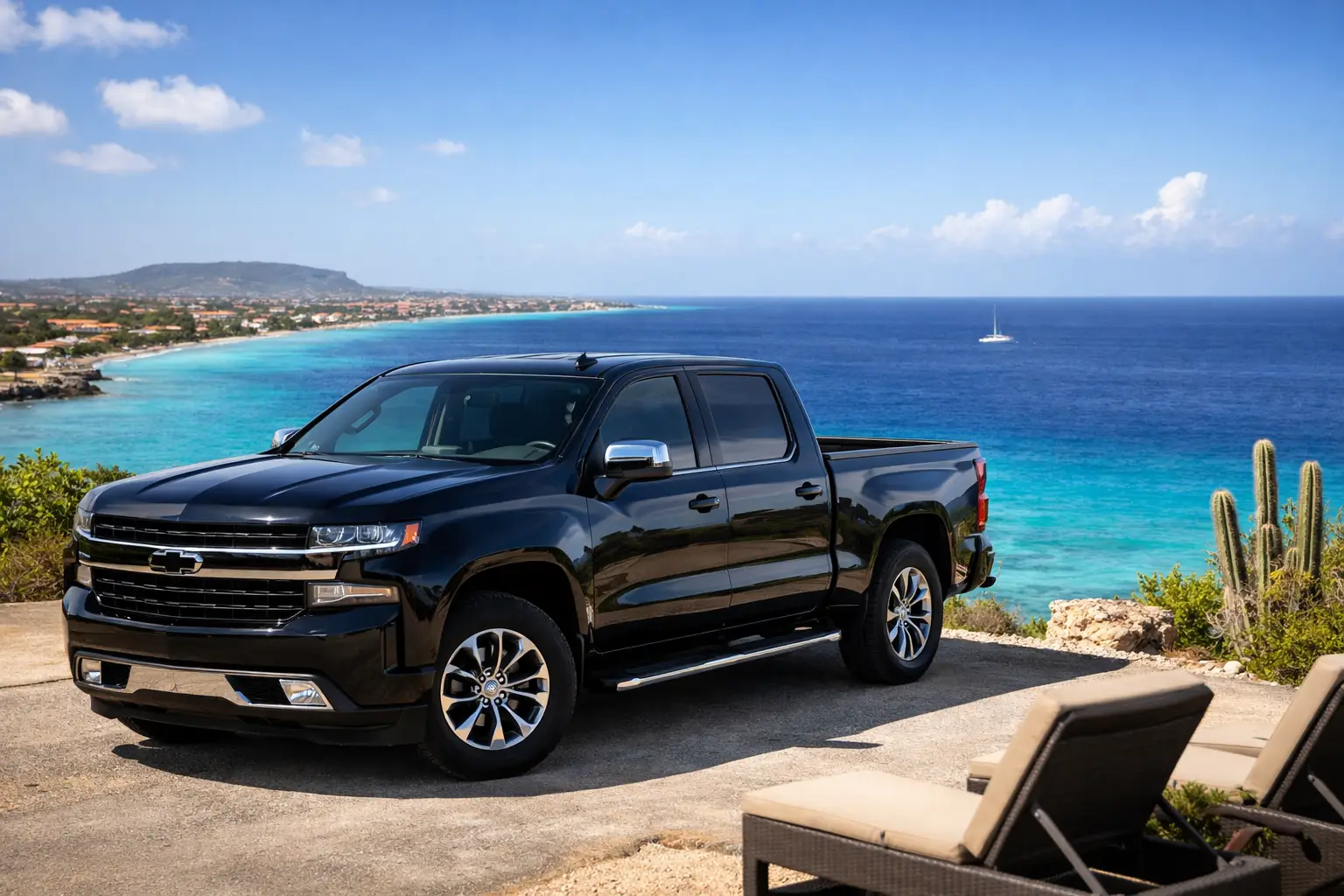
If Bonaire has a “default” dive vehicle, it’s the pickup. The bed is simply practical: tanks, weights, wet gear, and sandy chairs stay out of the cabin. Your interior stays cleaner, and your day feels easier.
There are usually multiple tiers, and that’s worth comparing. Standard pickups are often enough for most diving and island driving. Higher tiers and premium options can offer more comfort, newer features, or more capability. The rate difference may be worth it if you’re doing long days out, driving with a full group, or you just want a nicer ride for the week.
4x4s: worth it when your plans require it
Not every trip needs 4×4. But if Washington Slagbaai National Park is a must-do and you want to explore confidently, a true 4×4 can be the right call.
Here’s the “it depends” part: if you’re only considering the park as a maybe, you might choose a standard pickup and decide later. If the park is the point of your trip, build your rental around it and book the right vehicle from the start. Switching categories mid-stay isn’t always easy when the island is busy.
Compact Jeeps (like a Jimny): small footprint, big personality
Compact Jeeps can be a fun match for travelers who want something nimble with an adventurous feel. They’re often chosen by couples or small groups who want easy parking and a vehicle that feels at home on island roads.
The comparison tip here is to look at doors and cargo space. A 3-door and a 5-door drive differently in daily life when you’re loading bags or gear.
Scooters: best for confident riders and short hops
Scooters can look like a bargain in a rates comparison, and for some travelers they are. If you’re an experienced rider, staying close, and traveling light, they can be a convenient way to move around.
The trade-off is obvious: less protection from weather, less cargo, and less flexibility for remote exploring or carrying dive gear. Most visitors still prefer a car or truck as their main transportation.
Hidden costs to watch for when comparing rates
If you’ve ever booked a low rate and ended up paying more than expected, you already know why this section matters.
First, confirm taxes and mandatory fees. Second, ask about insurance options and what’s required. Third, check fuel policy so you’re not guessing on return day. And finally, clarify the pickup process – especially if your flight arrives late or changes.
Also think about the cost of your time. If one option requires extra steps, long waits, or complicated pickup, that inconvenience is part of the price. The smoothest rental is the one that lets you start your vacation the minute you land.
How to get the best value (not just the lowest number)
A good strategy is to price your trip in “days of use.” If you’ll be out early, diving all day, and driving to multiple sites, the vehicle is a core part of your vacation. It’s worth paying for the category that fits your real plan.
If you’re mostly relaxing near your hotel or resort and only driving for dinner and a couple beaches, you can keep it simple and spend less. Value comes from matching the vehicle to your schedule.
The single biggest lever you control is timing. Book earlier when you have set dates, especially in high season and especially if you want a pickup or 4×4. Last-minute shopping can work in slow periods, but it’s a gamble when the island is full.
One quick way to compare quotes in under 10 minutes
Pull up two or three options and make sure each quote answers the same questions: what exact category is guaranteed, what’s included, what’s the full total for your dates, and how airport pickup is handled. If any quote can’t answer those clearly, it’s not ready to be compared yet.
When you do this, you’ll often find the “cheapest” rate isn’t actually the cheapest total, and the “slightly higher” rate may include the convenience that makes your first day feel effortless.
If you’d like a local, straightforward option with a fleet designed around how people really explore Bonaire – including pickups, 4x4s, compact Jeeps, scooters, and even a specialty 1966 Ford Mustang for events – you can check availability directly at https://caribebonaire.com.
The best trips here don’t run on perfect plans. They run on having the right set of wheels, so you can say yes to the extra dive, the last-minute sunset stop, and the road that looks interesting.


 EN
EN  EN_CA
EN_CA  NL
NL