
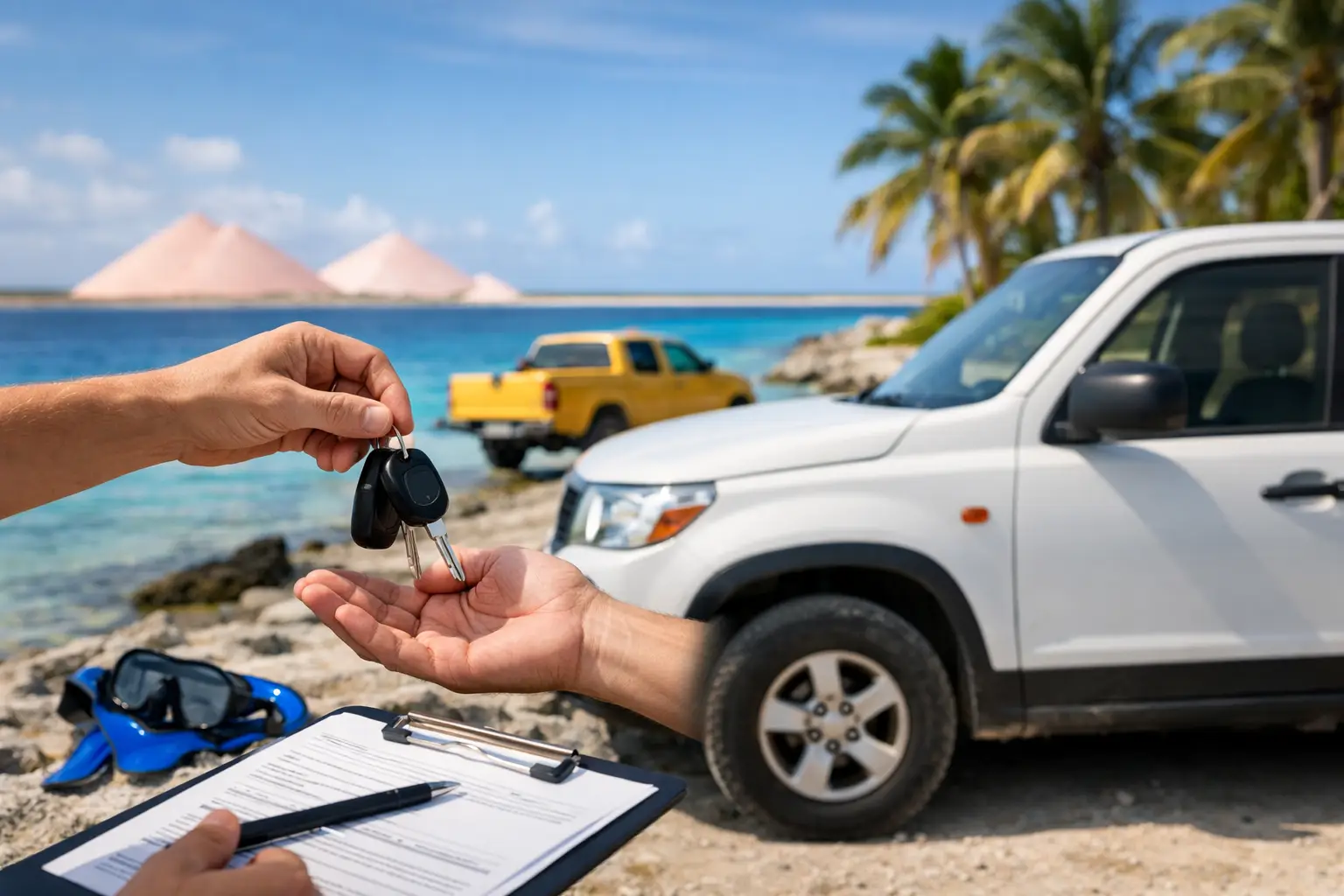

If you have ever stood at a rental counter after a flight and felt your confidence disappear the second the word insurance came up, you are not alone. Bonaire is easy to explore once you are on the road, but rental car insurance can still feel like the one part nobody explains clearly.
This bonaire rental car insurance explained guide is here to fix that. If you are visiting from the US, the goal is simple – help you understand what coverage usually means, what your credit card may or may not include, and where the real risk sits on an island like Bonaire.
Why insurance questions come up so often in Bonaire
Bonaire is not a place where most visitors stay parked at a resort all week. People come here to explore. They drive to dive sites, head out for dinner, make grocery runs, and often spend a day in Washington Slagbaai National Park. That means your rental vehicle is part of the trip, not just transportation from the airport.
Because of that, insurance matters more than many travelers expect. Roads are generally straightforward around town, but conditions can change once you head farther out. Some areas are rougher, some parking spots are tighter, and if you are carrying dive gear or heading into more remote terrain, choosing the right vehicle and understanding your coverage go hand in hand.
Bonaire rental car insurance explained guide for US travelers
The first thing to know is that rental car insurance is not one single thing. It is usually a mix of protections that cover different risks. The wording can vary by company, but the same basic categories tend to show up.
Liability coverage is the big one. This is the part that covers damage or injury you may cause to other people or their property. If you are used to renting cars in the US, you may assume this is always handled the same way everywhere. It is not. On Bonaire, you should never guess what the included liability amount is or whether there is an option to increase it.
Then there is damage coverage for the rental vehicle itself. Depending on the rental terms, this may reduce your responsibility if the vehicle is damaged in an accident or another covered incident. Some travelers call this collision coverage, some know it as a damage waiver. The key detail is that it often comes with exclusions, limits, and a deductible.
The deductible matters. A lot of renters hear that a car is insured and assume that means they owe nothing if something happens. In reality, many rental agreements still leave the renter responsible for the first portion of damage. That amount can be manageable or painful, depending on the contract.
Theft protection may also be included or offered separately. On Bonaire, theft is usually not the first concern visitors ask about, but it still belongs in the conversation. Just be aware that theft-related protection often depends on following the rental rules, such as locking the vehicle and not leaving valuables in plain sight.
What your credit card may cover – and what it may not
This is where many US travelers get tripped up. A lot of major credit cards offer rental car coverage, but the details are never as broad as people hope.
In many cases, credit card coverage is secondary, not primary. That means it may only kick in after another insurance policy responds. Some premium cards offer primary coverage, but that still does not mean every rental, every island, and every type of vehicle is covered.
The biggest blind spot is liability. Most credit card rental benefits do not provide liability coverage. They often focus on damage to the rental vehicle, not damage you cause to others. So if you are relying on your card alone, you may still have a serious gap.
There can also be exclusions for certain vehicle types. Pickups, large SUVs, off-road use, scooters, and specialty vehicles may not qualify. If your Bonaire plans include a truck for dive gear or a more capable vehicle for the national park, you should check that before arrival, not after.
Location rules matter too. Some cards exclude certain countries or islands, or require that you decline the rental company’s collision-type coverage to activate your card benefit. If you miss one requirement, your backup plan may disappear.
Why personal auto insurance from home may not travel well
Some US drivers assume their regular car insurance follows them automatically. Sometimes it does for rentals in the US or Canada. That does not mean it extends to Bonaire.
This is one of the easiest mistakes to make because people hear “rental coverage” in general terms and stop there. Before your trip, ask your insurer one direct question: “Does my policy cover rental cars on Bonaire, Dutch Caribbean?” If the answer is vague, ask for the answer in writing.
Even when a personal policy does apply, it may not cover every fee charged by a rental company. Loss of use, towing, administrative charges, tire damage, windshield damage, and undercarriage damage are common areas where travelers get unpleasant surprises.
The island-specific risks worth thinking about
A practical bonaire rental car insurance explained guide should talk about the kind of driving people actually do here.
If your trip is mostly beach clubs, restaurants, and easy paved roads, your risk profile is different from someone hauling dive tanks every day or planning a full day in Washington Slagbaai. Rough roads, rocky areas, and remote spots can increase the chance of tire damage, cracked windshields, or underbody scrapes.
That does not mean you need every available add-on. It means you should match your coverage to your plans. A couple staying near town and driving lightly may make one decision. A group of divers renting a pickup and moving gear around the island may reasonably make another.
This is also where vehicle choice matters. The cheapest rental is not always the cheapest trip if it is the wrong fit for your route. Sometimes spending a bit more on the right vehicle lowers stress and lowers the chance of damage in the first place.
Questions to ask before you book
The best insurance decision usually starts with clear answers, not assumptions. Before confirming a rental, ask what coverage is included in the quoted rate, what the deductible is, whether liability is included, and what types of damage are excluded.
Also ask about tires, glass, mirrors, roof, undercarriage, and damage that happens on unpaved roads. Those are not minor details on an island where outdoor exploring is part of the appeal.
If you plan to visit the national park, ask whether the vehicle is approved for that use and whether your coverage changes there. If you plan to carry dive gear, ask what vehicle type is best suited for it. A good local rental company should answer these questions clearly and without making you feel rushed.
How to avoid the most common surprise costs
Most bad rental stories do not start with a major accident. They start with a misunderstanding.
The simplest way to avoid that is to read the rental terms before arrival and take photos of the vehicle at pickup. Check the tires, bumpers, windshield, mirrors, and interior. If something is already marked or visible, make sure it is documented.
During the trip, park carefully and do not leave gear or bags visible inside the car. If something happens, report it right away instead of waiting until return. Small incidents are easier to sort out when everyone has the facts early.
It also helps to keep expectations realistic. Insurance reduces risk. It does not erase responsibility in every situation. If a company explains coverage clearly, gives you a clean vehicle, and helps you choose the right model for your plans, that is often where the real value starts.
Choosing a company that keeps things clear
Insurance terms matter, but so does the way they are explained. On Bonaire, the best rental experience usually comes from working with a local team that knows the roads, understands how visitors use vehicles here, and answers questions in plain English.
That is especially helpful if your trip includes airport pickup, dive schedules, family logistics, or park driving. Clear communication up front saves time, lowers stress, and helps you make a smart choice instead of a rushed one. At Caribe Car Rental Bonaire, that straightforward approach is part of the service, along with vehicles that fit how people actually explore the island. You can learn more at https://caribebonaire.com.
Before you reserve, take five extra minutes to ask the insurance questions you would rather not deal with later. A good island trip starts with a vehicle you trust, a policy you understand, and one less surprise waiting at the counter.
 EN
EN  EN_CA
EN_CA  NL
NL