
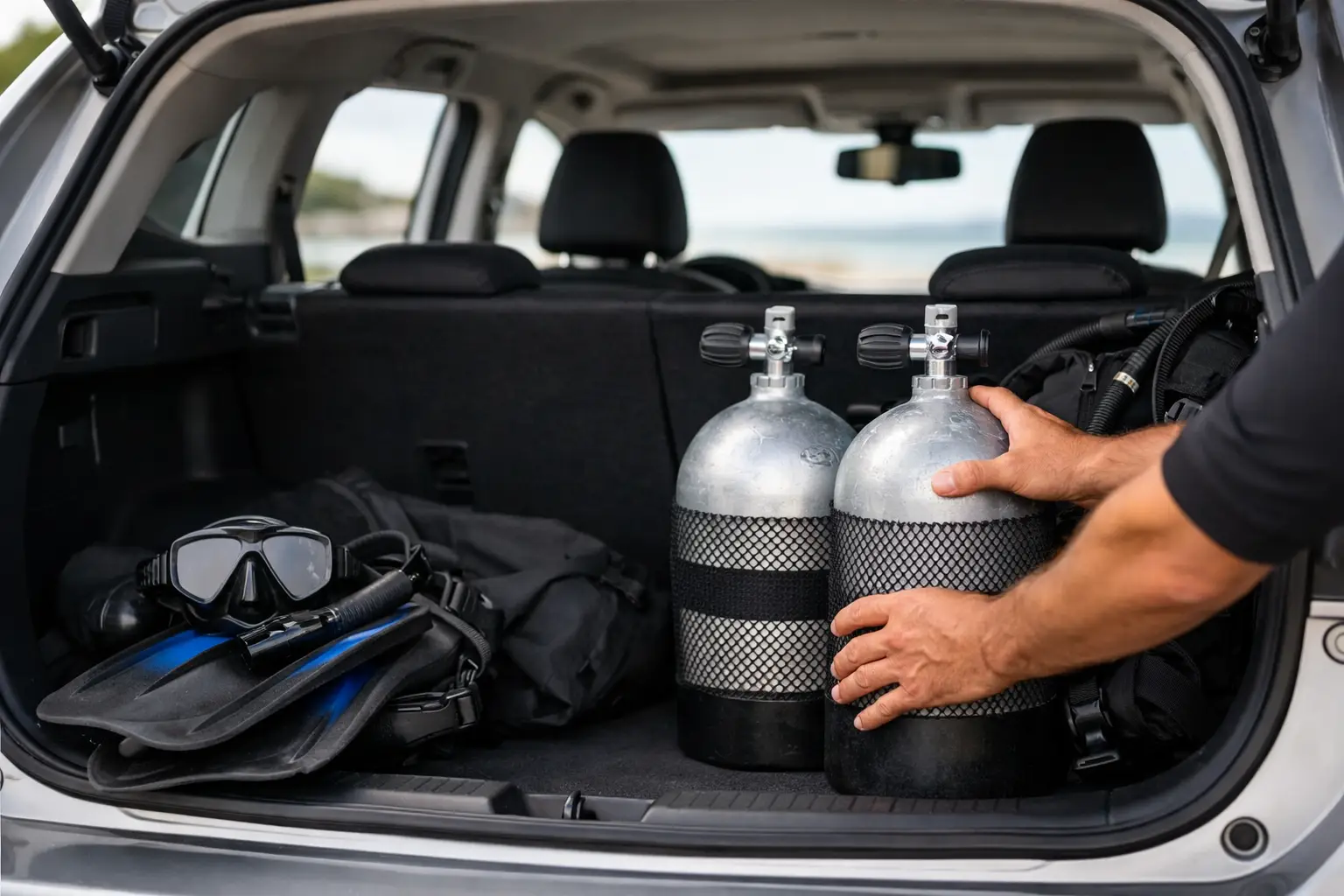

You land on Bonaire, pick up your vehicle, and suddenly the question gets very real: can a rental car fit scuba tanks safely? The short answer is yes, often it can, but not every rental car is the right fit for every dive plan. A couple heading to one or two shore dives has very different needs than a group hauling multiple tanks, BCDs, fins, coolers, and camera gear.
That is where a little planning saves a lot of frustration. The safest setup depends on how many tanks you are carrying, how often you are moving them, what other gear is coming along, and whether you want simple transportation or a vehicle built for dive days.
Can a rental car fit scuba tanks safely for your trip?
In many cases, yes. A standard rental car can handle scuba tanks if you are carrying a modest number and loading them properly. Two divers with a few tanks for the day can often make a sedan, compact SUV, or larger hatchback work just fine.
The catch is that “fit” and “fit safely” are not the same thing. A tank that technically fits in a trunk but rolls around every turn is not safely stored. The same goes for tanks stacked on top of soft bags, wedged against a car door, or packed so tightly that visibility and passenger comfort take a hit.
For dive travelers, the better question is not only whether the tanks fit, but whether the vehicle leaves enough room for people, gear, and easy loading after a long day in the sun. That is why many divers lean toward SUVs, pickups, or utility-friendly vehicles rather than the smallest economy options.
What matters more than the tank itself
A scuba tank is heavy, solid, and awkward. Even one tank can shift if it is not secured. Add wet gear, weights, and a few uneven roads, and the loading setup matters as much as cargo volume.
The real issue is movement. Tanks should stay low, stable, and separated from passengers as much as possible. If they can roll, tip, or slam into other gear, you are creating risk for the vehicle interior and everyone inside.
Interior space also matters in a practical way. A car may fit tanks in the trunk, but if you need to remove half your luggage every time you stop, that convenience disappears fast. Divers usually appreciate easy access more than they expect before the trip starts.
How many tanks are we really talking about?
This is where the answer changes quickly. Two tanks for two divers on a relaxed day trip is one thing. Four to six tanks plus full dive kits is another. A small car might be workable for the first scenario, but it starts feeling cramped in the second.
If you are planning repeated shore dives, carrying extra cylinders, or traveling with buddies, a roomier vehicle gives you more than space. It gives you flexibility. You can separate wet and dry gear, protect camera equipment, and avoid cramming heavy items into places they do not belong.
Which rental vehicle types work best?
Vehicle choice should match the way you actually dive, not just the cheapest rate on the page. Saving a little on the rental can backfire if every dive day starts with a packing puzzle.
A sedan can work for light-duty diving. If it has a decent trunk and you are traveling as a couple with limited gear, it may be enough. The tanks can sit low in the trunk, away from passengers, and the cabin stays cleaner and more comfortable.
An SUV is often the easiest all-around choice for divers. You get more cargo height, a wider rear opening, and enough room for tanks, fins, towels, and dry bags without forcing everything into one tight compartment. For many visitors, this is the sweet spot between comfort and utility.
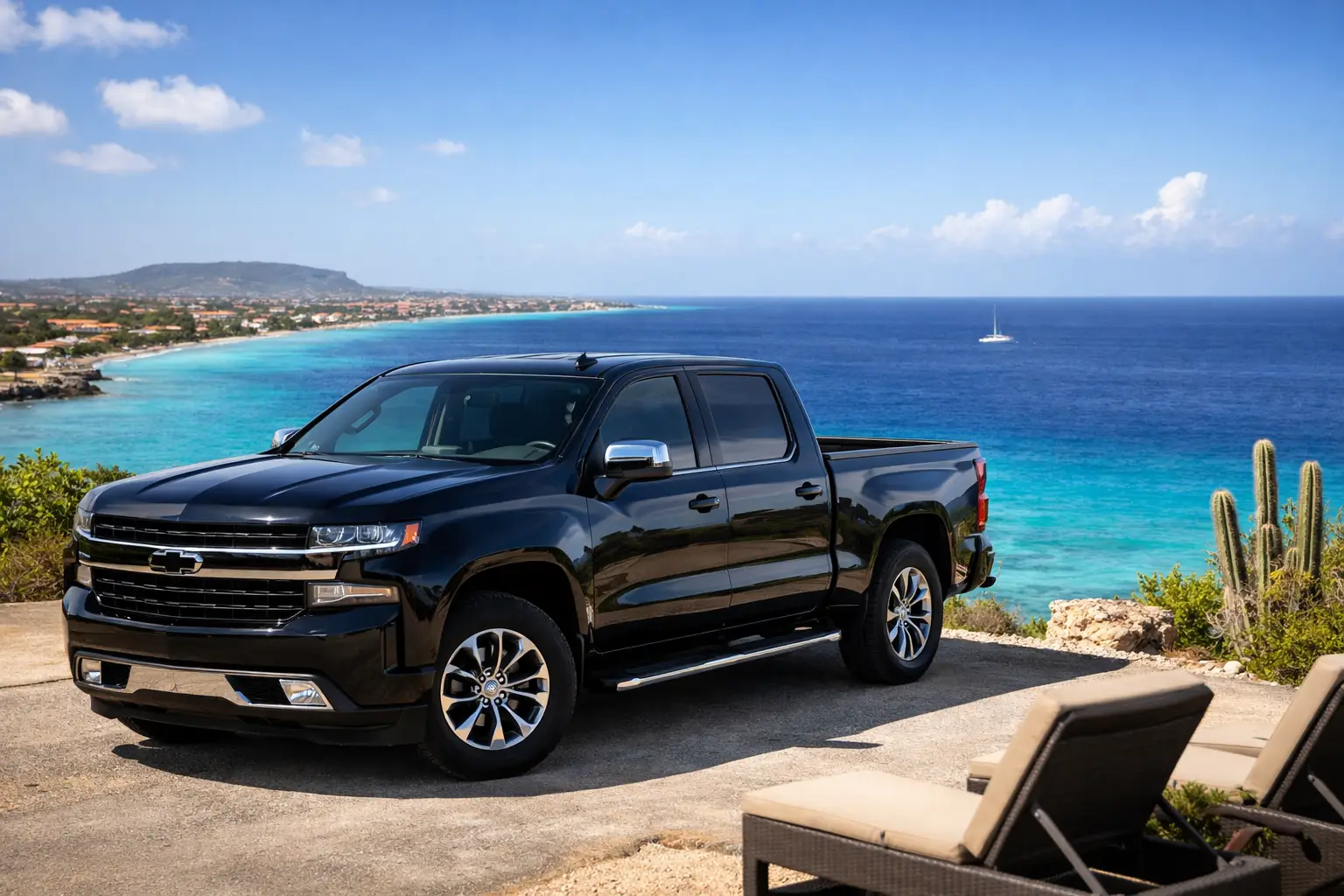
A pickup truck is usually the most practical option if you are carrying several tanks, diving with a group, or heading to rougher areas where extra capability helps. Loading is simpler, the heavy gear is separated from the cabin, and you do not have to play cargo Tetris every time you stop. On Bonaire, that matters because many dive days are active, gear-heavy, and not limited to paved parking lots.
Compact Jeeps and similar utility vehicles can also make a lot of sense for dive travelers who want a smaller footprint but better cargo flexibility than a basic car. They are especially appealing if your plans mix shore diving with more adventurous island exploring.
How to load scuba tanks safely in a rental car
This is the part that matters most. Even the right vehicle can become the wrong setup if tanks are loaded carelessly.
Place tanks flat when possible, on a stable surface, and keep them low. Use towels, bags, or other padding to reduce rolling and protect the interior. If a vehicle has cargo tie-downs or a cargo area that helps contain movement, use that to your advantage.
Do not stack tanks in a way that lets the top one slide off. Do not place them where they can shift into passengers. And do not rely on soft gear alone to stop movement. Soft bags compress. Tanks do not.
Wet gear should be managed separately when possible. That is partly about comfort and partly about keeping visibility and access clear. A vehicle packed to the roof may technically hold everything, but it is not a good setup for driving or unloading.
A few practical mistakes to avoid
One common mistake is choosing a vehicle based only on passenger count. Four adults may fit in a car, but four adults plus tanks and dive gear may not fit well at all. Another is assuming a short drive means safety matters less. Even low-speed shifting cargo can damage a vehicle or create a distraction.
It is also smart to think beyond the first load. Tanks are easier to pack neatly at the start of the day than after a dive when everything is wet, sandy, and you are tired. Give yourself margin.
When a standard car is enough and when it is not
A standard car is usually enough if you are a solo diver or couple, carrying a limited number of tanks, and sticking to a simple day plan. If your gear load is light and you value air conditioning, easy parking, and a lower daily rate, a car can be a reasonable choice.
It starts becoming less ideal when you are diving often, carrying multiple tanks, bringing large camera housings, or sharing the vehicle with friends or family. The same goes if your plans include rougher access areas, beach setups, or a lot of in-and-out loading.
That is where upgrading stops being a luxury and starts being the practical choice. A larger vehicle is not just about capacity. It reduces hassle, protects your gear, and makes the trip feel easier from day one.
Why divers often choose pickups or SUVs on Bonaire
Bonaire is not a destination where people stay boxed into one resort shuttle and one marina departure. Many visitors come specifically for shore diving, freedom, and the ability to explore on their own schedule. That changes the vehicle decision.
When you are loading tanks regularly, dealing with sun and salt, and possibly heading toward more rugged routes, utility matters. A pickup or SUV gives you breathing room. You are not wondering whether one more tank will fit, whether your wetsuit will soak the seats, or whether unloading at each stop will take ten minutes.
That is one reason dive travelers often skip the smallest car categories and choose something better suited to the way they actually move around the island. At Caribe Car Rental Bonaire, that practical fit is a big part of why the fleet includes SUVs, pickup trucks, and compact Jeeps alongside standard cars.
So, can a rental car fit scuba tanks safely?
Yes, if the vehicle matches your dive plans and the tanks are loaded correctly. For light diving needs, a car may be perfectly fine. For heavier gear loads, repeated shore dives, or group travel, an SUV, Jeep, or pickup is usually the smarter and safer call.
The best rental choice is the one that keeps your tanks stable, your passengers comfortable, and your day simple. If you are deciding between “it might fit” and “it will work easily,” go with easy. On a dive trip, that extra space tends to earn its keep very quickly.
A good vehicle should make your island time feel hassle-free, not like a packing challenge before every dive.


 EN
EN  EN_CA
EN_CA  NL
NL