You land in Bonaire feeling organized – and then you remember the reality: wet BCDs, sandy booties, two tanks per diver, and a schedule built around shore entries. The wrong vehicle turns that plan into a daily headache. The right one makes Bonaire feel as easy as it should.
This guide is about choosing the best car rental for scuba gear Bonaire, with the practical details that actually matter once you start doing two, sometimes three, dives a day.
Why your vehicle choice matters on Bonaire
Bonaire shore diving is wonderfully independent, but that independence comes with logistics. You are not doing one boat dive and calling it. You are loading, unloading, parking, rinsing, and repeating. The vehicle becomes part of your dive system.
A good rental setup protects your gear, keeps your day moving, and helps you stay relaxed when you are tired, salty, and ready for dinner. A bad setup means cramped seats, wet upholstery, foggy windows from damp gear, and constant stress about leaving anything visible.
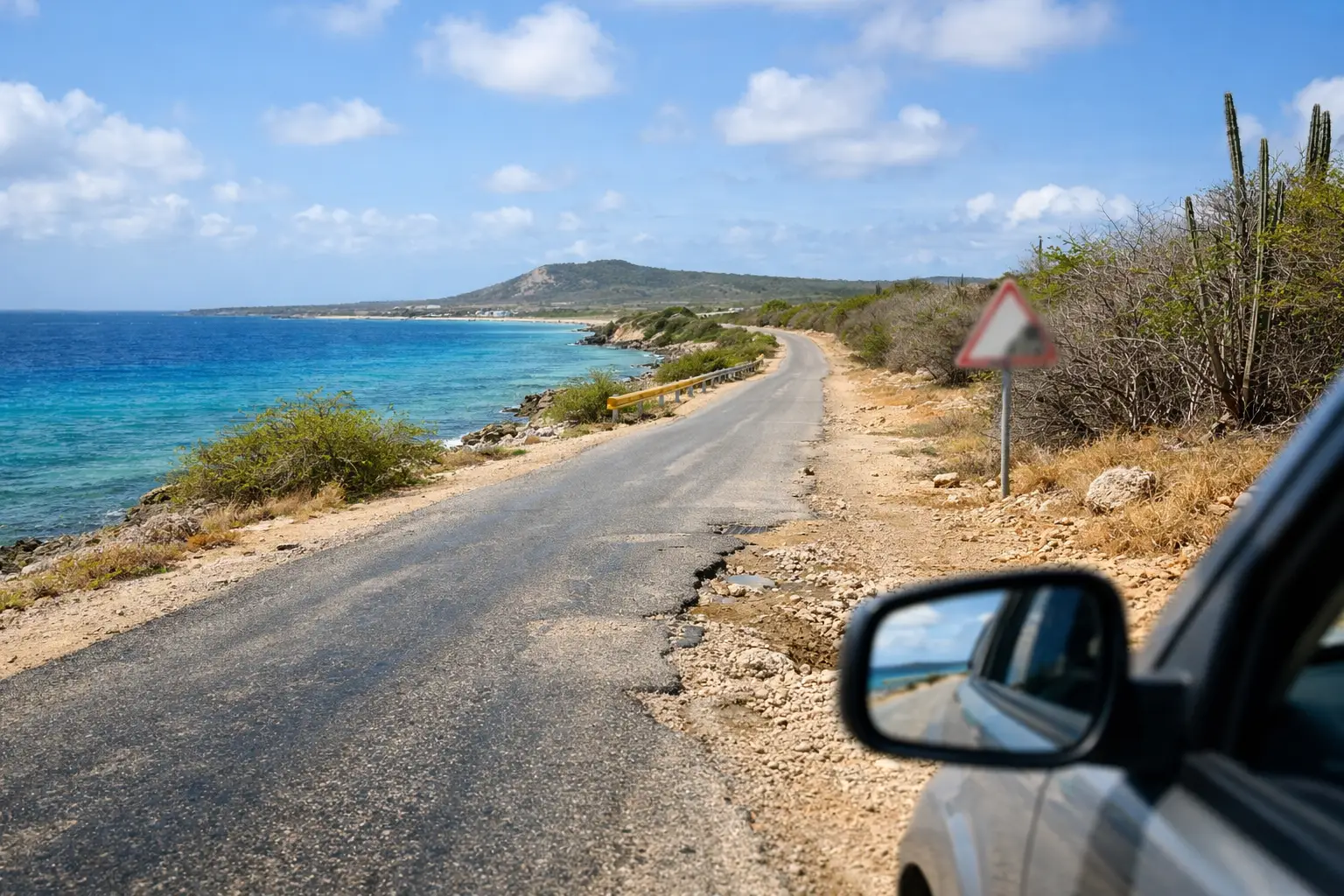
There is also the simple fact that many dive sites are reached by roadside pull-offs and uneven shoulders. You do not need a monster truck for most sites, but you do want something that feels stable, easy to load, and easy to live with for a full week.
The best vehicle types for scuba gear
There is no single perfect choice for every group. It depends on how many divers you are, how much gear you pack, and whether Washington Slagbaai National Park is on your plan.
Pickup trucks: the classic Bonaire dive setup
If you ask experienced Bonaire divers what they rent, pickups come up for one reason: cargo space that is separate from the cabin. Wet gear stays outside. Sand stays outside. Your seats stay dry. Loading tanks is quick, and you are not playing Tetris twice a day.
A pickup is also the most forgiving choice when your gear expands. It always does. You start with “just the essentials,” then add a camera rig, a dry bag, extra water, snacks, and another set of fins because somebody forgot theirs at the apartment.
The trade-off is exposure. Gear in an open bed is more exposed to sun, dust, and the occasional surprise shower. You will want to bring a simple routine and stick to it: cover your gear, keep valuables on your person, and do not leave anything tempting in sight.
SUVs: comfortable, secure, and great for mixed groups
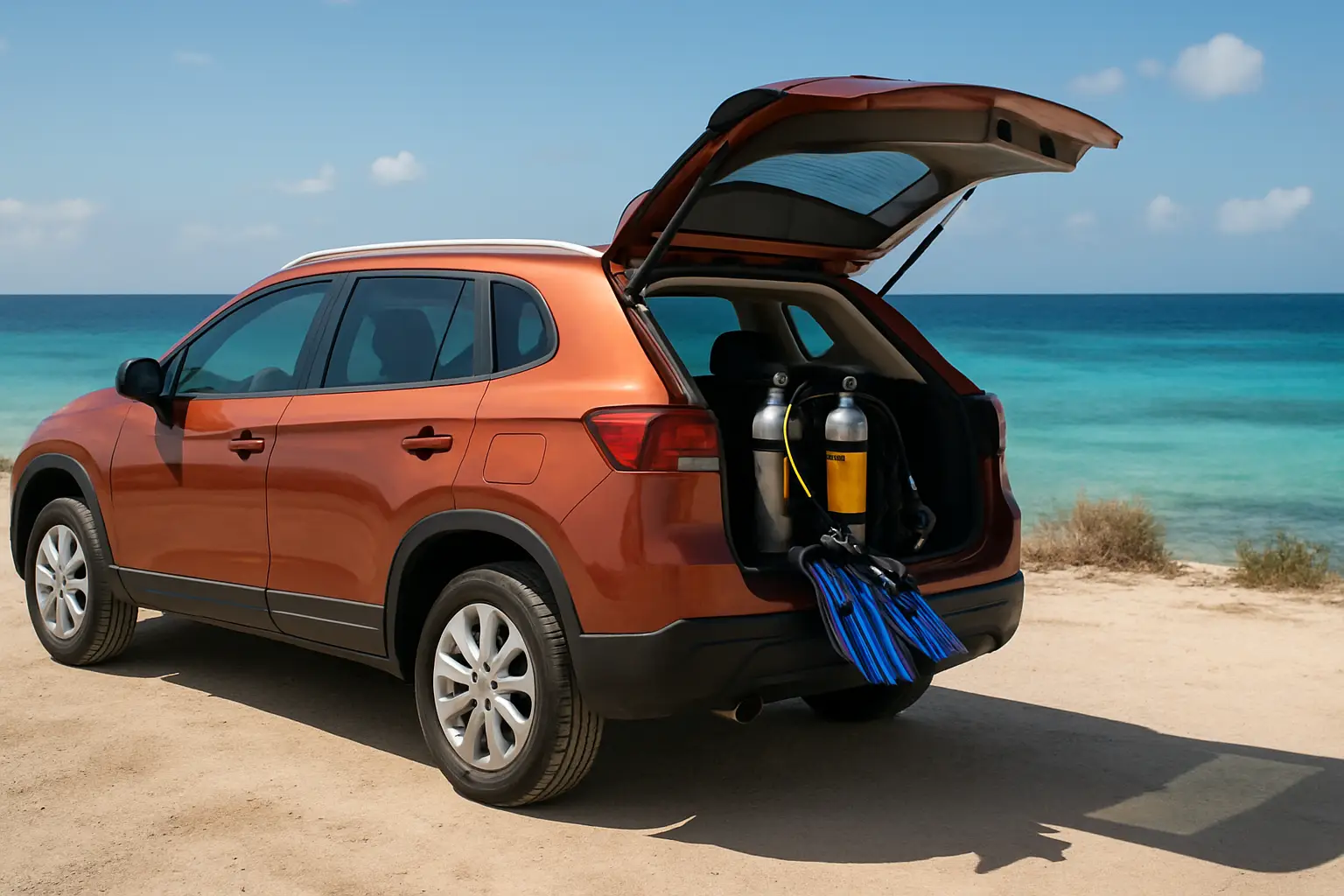
An SUV can be a great option for couples or families who want more comfort and a more closed, secure feel when parked. You can fit plenty of gear with the seats folded down, and you get a higher driving position that many people prefer on Bonaire’s roads.
The trade-off is wet gear inside the cabin unless you are very disciplined. If you go SUV, plan to use a large bin or tub for wet items and keep a towel or light mat dedicated to protecting the cargo area. You will be much happier on day four when everything is still clean and not permanently damp.
Economy cars and sedans: possible, but be honest about your style
Yes, people shore dive with compact cars. If you are traveling light, doing fewer dives, and staying close to town, it can work.
But if you are doing the full Bonaire dive routine with multiple tanks, cooler, and two divers worth of gear, smaller cars get uncomfortable fast. You end up stacking wet gear on seats, squeezing tanks into tight spaces, and spending extra time loading. The savings can disappear if you are frustrated every day.
4×4: when it’s truly worth it
Most shore sites do not require 4×4. What does make a 4×4 worth considering is your plan.
If Washington Slagbaai National Park is a must-do and you want the freedom to explore it without second guessing road conditions, a 4×4 pickup or 4×4 SUV is the stress-free choice. The park roads can be rough, and having the right vehicle lets you focus on the scenery instead of the bumps.
What divers should look for in a rental, beyond “it fits”
Space matters, but divers know the details are what make the day smooth.
First, think about loading height and access. A bed or cargo area that is easy to reach makes a difference when you are lifting tanks multiple times a day. If someone in your group has a back or shoulder issue, choose the vehicle that makes loading simplest.
Second, consider what “wet” means for your plan. If you do a morning dive, grab lunch, then do an afternoon dive, you will have damp gear with you all day. That is normal. Your rental should make that normal, not miserable.
Third, pay attention to how you will manage small valuables. Bonaire is a friendly island, but the best practice everywhere is to keep things simple. Bring only what you need to the site, keep it out of sight, and avoid leaving bags visible.
Simple habits that protect your gear and your rental
You do not need a complicated system, just a consistent one.
Rinse when you can, but do not chase perfection. A quick rinse and a shake-out is often enough until you are back at your place. What matters more is not letting standing water sit where it will smell and soak.
Use a dedicated “wet zone.” Many divers use one large plastic bin or tub in the back to hold wetsuits, booties, and masks after the dive. It keeps sand contained and makes unloading easy. If you are in a pickup, the bin also helps keep smaller items from sliding.
Bring one towel that is only for the vehicle. This is the towel that goes under the bin, wipes your hands, and protects surfaces. It is not your shower towel. That separation keeps everything cleaner.
And keep the cab boring. Sunscreen, a water bottle, and maybe a dry bag with paperwork. The less stuff in the cabin, the less you worry when you park.
Planning your week: matching the vehicle to your dive rhythm
If you are doing unlimited shore diving, your car is basically booked solid. You will be at a dive site early, you will be back at it late, and you will park a lot. That makes easy entry and exit important.
Couples often do best with either a pickup (for simple wet storage) or a compact SUV (for comfort and security). Groups of three or four divers should seriously consider a pickup with enough bed space for tanks and fins without stacking too high. If you are mixing divers and non-divers, an SUV can keep everyone comfortable, but make sure the wet gear plan is real, not wishful.
If your trip includes a “do everything” day – national park, remote beaches, or a longer island loop – that is the day you will be happiest you picked a vehicle with a little more clearance and a more confident feel on rougher roads.
Airport arrival: the part nobody wants to troubleshoot
After a flight, the last thing you want is a slow, confusing rental process. For dive travelers, arrival day is often also “set up” day. You need groceries, you need to stop at the dive shop, you might want an easy check-in, and you probably want to sleep.
This is where choosing an on-island company that runs a clean process and can coordinate airport pickup can save real time and stress. It is not just convenience – it helps you start the trip in the same calm rhythm you want underwater.
If you want a family-owned, on-island option built around easy arrivals and vehicles that fit Bonaire diving, Caribe Car Rental Bonaire is a strong place to start. You can reserve online at https://caribebonaire.com and keep your arrival day simple.
Cost vs convenience: where divers get the best value
The cheapest car can be expensive if it costs you time twice a day. Divers often underestimate how much the “loading tax” adds up. Ten extra minutes packing and repacking does not sound like much until it happens four times a day.
On the other hand, you do not need to overspend on capability you will not use. If you are staying mostly on paved routes and standard shore sites, you can skip higher-tier 4×4 options and put that budget into another night out or an extra boat dive.
The best value is the vehicle that matches your real plan. Two divers, heavy shore schedule, lots of wet gear: pickup or SUV with a solid wet-storage setup. National park day plus exploring: consider 4×4. Light diving, more dining and sightseeing: smaller can work if you pack smart.
A quick reality check before you book
Before you confirm anything, picture one specific moment: you are parked at a site with a narrow shoulder, the sun is hot, and you are swapping tanks for dive two. Can you reach everything easily? Do you have a place for wet gear? Can you keep your essentials with you without juggling?
If the answer is yes, you picked well. If the answer is “maybe,” size up now – it is usually the simplest fix you can make for the whole trip.
Bonaire rewards divers who keep their setup simple and repeatable. Pick a vehicle that makes your routine easy, treat your gear like it deserves, and you will spend less time managing stuff and more time doing what you came for: quiet entries, long bottom times, and sunsets that feel like they were timed just for you.


 NL
NL  EN
EN  EN_CA
EN_CA