
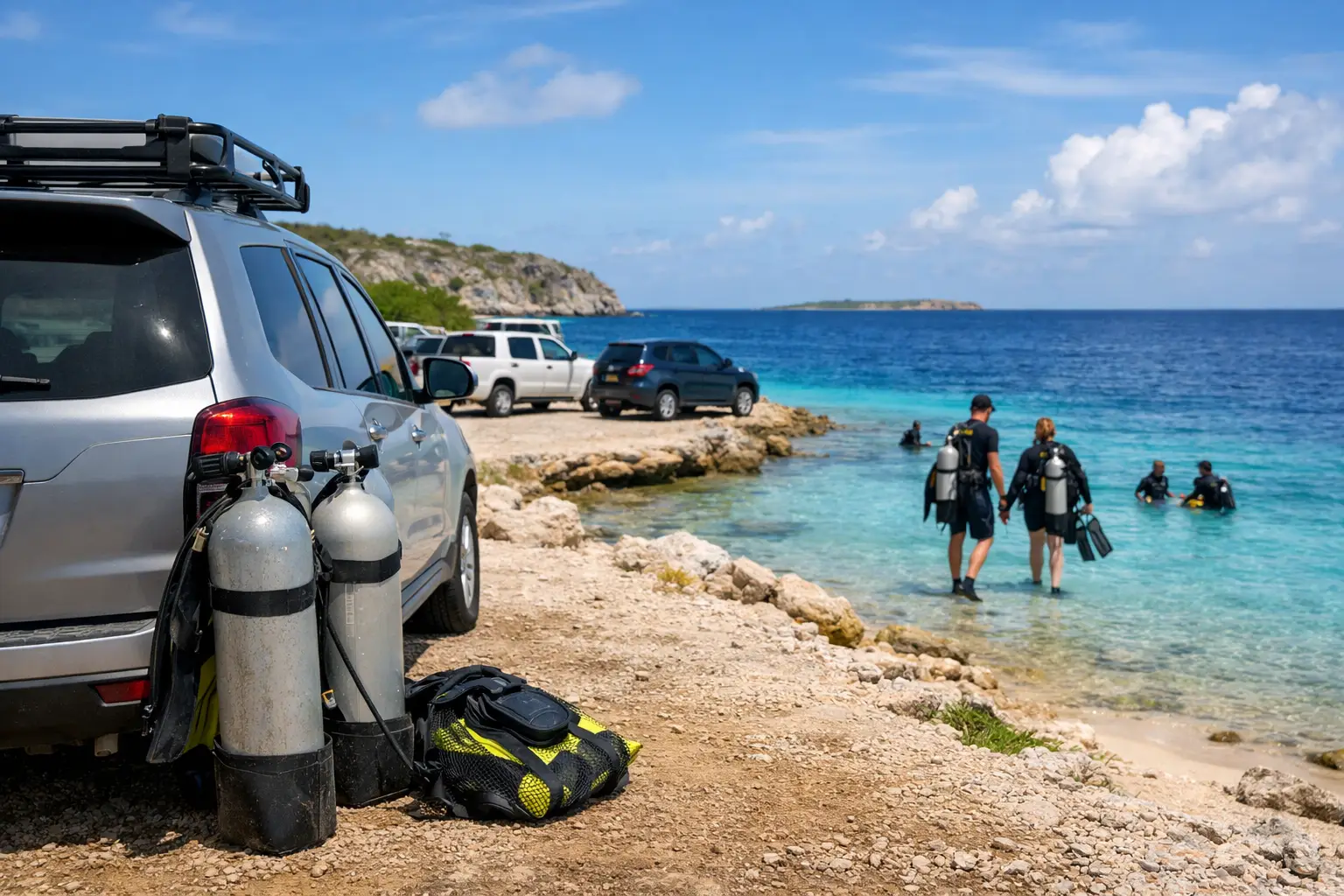

Pulling up to a yellow stone, spotting a narrow shoulder, and figuring out whether your truck is actually out of the way – that is a normal part of shore diving here. This guide to parking around Bonaire dive sites is built for visitors who want less guesswork, less stress, and more time in the water. Parking on Bonaire is usually simple, but simple does not mean careless. A good spot keeps your vehicle safer, keeps traffic moving, and makes your entry and exit much easier with tanks and gear.
What parking is really like at Bonaire dive sites
Most Bonaire shore dive sites do not have formal parking lots in the way many US travelers expect. More often, you will find a roadside pull-off, a dirt shoulder, a small cleared area near the entry, or a rough patch of coral rock where vehicles have parked many times before. At popular sites, the pattern is obvious. At quieter sites, you may need to read the terrain a little.
The main rule is common sense. Park where you are clearly off the road, where another vehicle can still pass easily, and where you are not blocking shoreline access for other divers. If a spot looks too tight, uneven, or soft, it probably is. On Bonaire, the easiest mistake is pushing too close to the waterline or trying to squeeze into a space that will be awkward once tanks, fins, and people are moving around.
That matters more than many first-time visitors realize. A parking choice that seems fine when you arrive can feel very different after a long dive, when the sun is higher, your gear is heavier, and someone else has parked beside you.
A practical guide to parking around Bonaire dive sites
The best parking approach starts before you stop the vehicle. As you roll up to a site, slow down and look at the whole setup – shoreline entry, road width, surface condition, and where other divers are staging gear. You are not just looking for empty space. You are looking for the easiest safe transition from vehicle to water.
If there is a well-used parking area, use it. If there is no obvious area, choose firm ground and leave enough room to open doors and unload without stepping directly into traffic. Reverse in when it helps. On many sites, backing into a spot gives you a simpler unload and a much easier departure later, especially if the road is narrow.
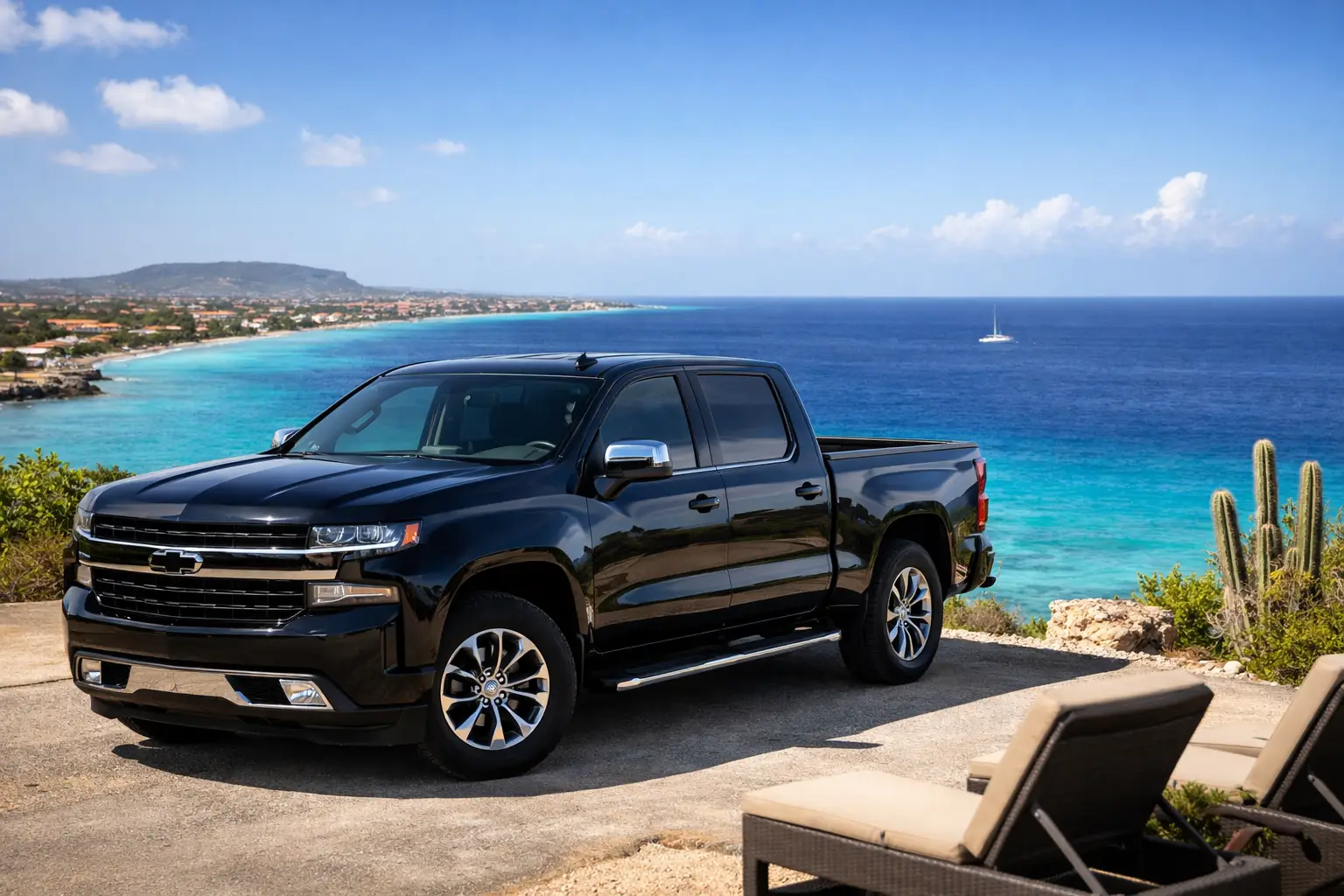
Try not to park on loose rubble or sharp uneven limestone if a flatter patch is available. Bonaire roads near dive entries can be rough on tires, and unstable footing makes gearing up harder than it needs to be. This is one reason many divers prefer a pickup or SUV over a compact car. Ground clearance is not just about off-road driving. It also makes repeated site access less stressful.
Distance to the water is a trade-off. Closer means less carrying, but too close can mean tighter maneuvering, more crowding, or a greater chance of getting boxed in. A slightly longer walk on solid ground is often the better move.
Don’t leave the wrong things in sight
Parking safety on Bonaire is not complicated, but it is important. The standard advice is simple because it works: leave the vehicle empty-looking. Do not leave phones, bags, wallets, speakers, towels, charging cables, or cases visible inside. Even inexpensive items can attract attention if they are out in the open.
Many experienced divers take only what they need to the site and leave passports and extra valuables back at their accommodation. If you need a key while diving, use the setup that makes the most sense for your group, but avoid creating an obvious hiding routine around the vehicle. If everyone watches you tuck something into the same place before every dive, it is no longer hidden.
This is also where vehicle choice matters. A clean, practical rental with enough room for your gear helps you organize quickly and avoid the messy shuffle that leaves valuables exposed while you sort things out. Good parking habits and smart packing work together.
Popular sites vs. remote sites
Not every Bonaire dive site feels the same from a parking standpoint. Popular shore dives tend to be more straightforward. You will usually see where others have parked, where entries happen, and how people are staging tanks. The challenge there is timing. Mid-morning and late afternoon can get busier, which means less choice and more need to park neatly.
Remote sites ask for a little more judgment. The surface may be rougher, the shoulder narrower, and the turnoff less obvious. If you are heading toward less-developed access points or planning a day that includes Washington Slagbaai National Park, the wrong vehicle can turn a simple outing into an annoying one. Some roads are perfectly manageable with care, while others are more comfortable in a truck or 4×4. It depends on the season, recent road wear, and how confident you are driving on uneven surfaces.
That is why many divers who plan multiple shore dives a day choose a vehicle built for gear and rougher access, not just the cheapest option on paper. The savings from a smaller car can disappear quickly if every entry and exit becomes a hassle.
How to park without slowing everyone down
The best dive-site parking is efficient. Pull in, unload, gear up, and leave room for the next group to do the same. If you arrive at a crowded site, avoid angling your vehicle across more space than you need. Keep the approach clear for people dropping tanks or turning around.
If you are diving with friends in more than one vehicle, do not spread out casually. Park in a way that leaves the fewest awkward gaps. Bonaire shore diving is relaxed, but that relaxed feeling depends on everyone being considerate.
Noise matters too. Early morning sites are often quiet for a reason. Keep music low, conversation normal, and doors from slamming if you can help it. You are sharing the area with other divers, nearby residents, and often people enjoying the shoreline for reasons that have nothing to do with scuba.
Timing changes your parking options
Morning light, afternoon heat, and cruise-ship traffic patterns can all affect how easy a site feels. The same dive site can seem spacious at 8:00 a.m. and cramped by 11:00. If a site is high on your list and known to be popular, going earlier usually gives you better parking, easier staging, and a calmer start.
Late-day dives can also be great, especially when the site has thinned out again. Just make sure you are thinking ahead about your exit. Rough shoulders and uneven ground look different in fading light, and packing up after sunset is easier when you chose a clean, simple parking position to begin with.
Heat is another factor US travelers sometimes underestimate. Carrying tanks across a hot roadside area in full sun is not the same as carrying them from a shaded lot. A spot with a bit more room and less scramble is worth a lot by the second or third dive of the day.
Choosing the right vehicle for Bonaire dive parking
If your trip is built around shore diving, think beyond seats and daily rate. Think about tank space, wet gear, door access, ride height, and how often you will be pulling onto uneven shoulders. A sedan can work for some travelers sticking to easier sites, especially if they pack light and do not mind being selective. But many dive visitors are happier in a pickup, SUV, or compact 4×4 because it makes the whole day easier.
That is especially true for couples or groups carrying multiple tanks, rinse items, dry bags, snacks, and camera gear. More room means faster setup and less clutter visible inside the cabin. It also means fewer awkward parking decisions caused by trying to protect gear from getting crushed, soaked, or left in plain sight.
A local company like Caribe Car Rental Bonaire can usually steer you toward the right fit quickly because they know what visitors are actually doing with the vehicle once they leave the airport.
Small habits that make a big difference
A few habits pay off every day. Keep your gear organized so you are not repacking the vehicle at each stop. Bring a small system for separating dry items from wet ones. Check the ground before you commit to a parking spot, not after. And when in doubt, choose the easier exit over the shorter walk.
It also helps to keep your expectations realistic. Bonaire shore diving is wonderfully independent, but part of that freedom is accepting that not every site comes with polished infrastructure. Some entries are rugged. Some shoulders are awkward. Some days you will drive a little farther down the road and decide the first spot was actually the better one.
That is normal. Good parking on Bonaire is less about perfect rules and more about reading the site, respecting the space, and setting yourself up for an easier dive day. Get that right, and the island feels exactly as it should – hassle-free, flexible, and ready when you are.
 NL
NL  EN
EN  EN_CA
EN_CA