

You land in Bonaire, the air is warm, and everything feels close – until you realize your first beach stop is a few miles away and the sun is moving fast. That’s the moment a scooter starts to make a lot of sense. It’s quick, breezy, and simple, especially if your plan is to stay around town, hop between beaches, or run easy errands without feeling “stuck” waiting on anyone.
But scooter rental in Bonaire is also a decision with real trade-offs. The island is friendly, yet not every road is scooter-friendly. The wind can surprise you. And if you’re carrying dive gear or heading into the national park, you’ll want a different set of wheels.
When scooter rental in Bonaire is a great idea
Scooters are at their best when your days are light, flexible, and close to the main roads. If you’re staying in or near Kralendijk and want the freedom to explore without parking stress, a scooter is hard to beat. You can glide down the coastal road, stop for a quick swim, and pull into small spots that might feel tight in a larger vehicle.
Scooters also fit travelers who like to keep plans simple: breakfast in town, a beach hour, a late lunch, maybe a sunset drink. For couples traveling with minimal luggage, it’s often the easiest way to move around without overthinking it.
It’s also a solid choice if you already have a vehicle for “big mission” days. Some visitors rent a pickup for diving-heavy days and add a scooter for evenings or short runs. It depends on your itinerary and your comfort level riding.
When a scooter is not the right fit
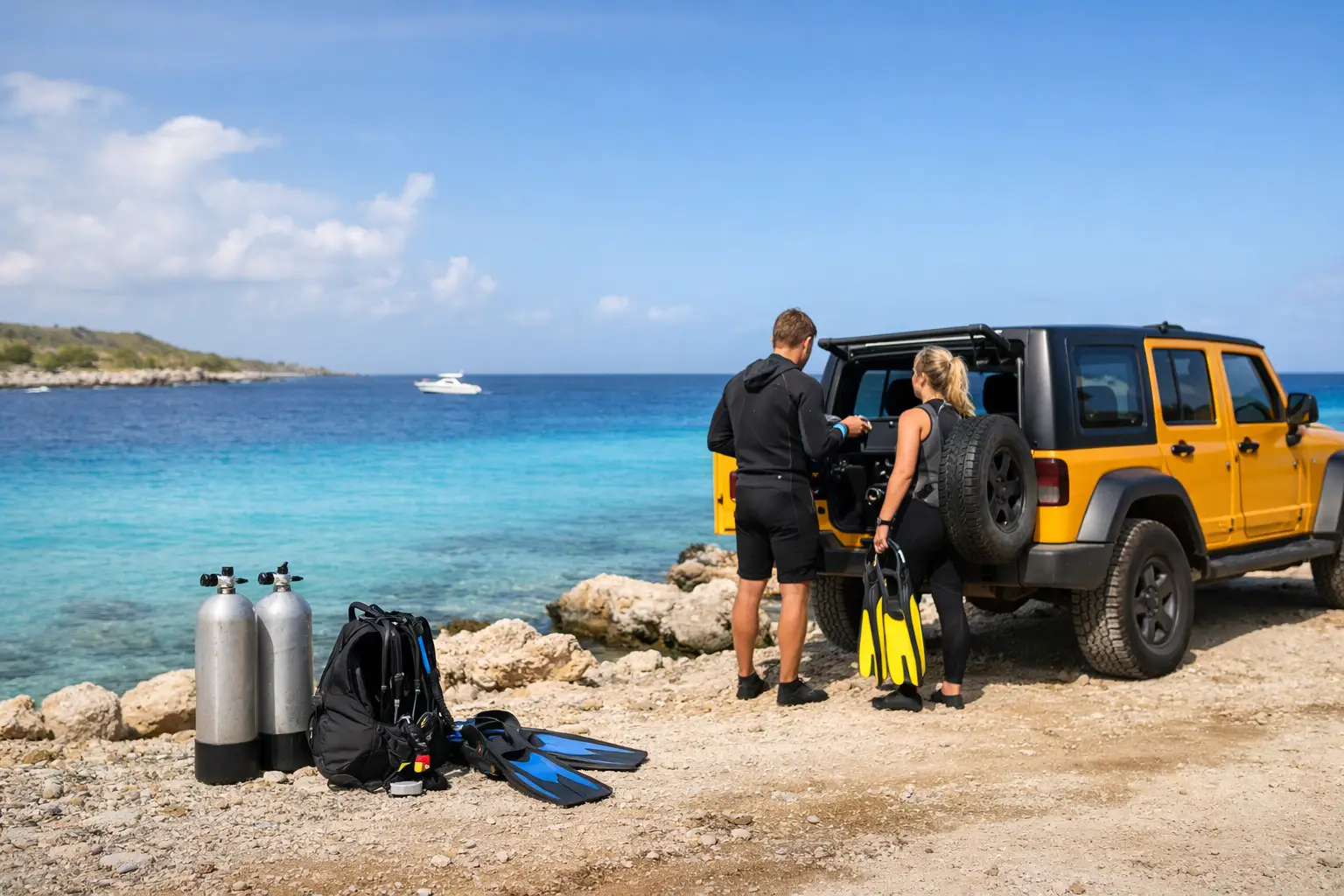
If your trip is centered on shore diving with tanks and weights, a scooter will feel limiting fast. Bonaire diving is all about flexibility – you want to load gear, move between sites, and keep things secure. Scooters are not built for that kind of hauling, and you’ll spend more time “making it work” than enjoying the island.
If you’re planning Washington Slagbaai National Park, treat that as a clear line in the sand. The park’s terrain is rough, remote, and dusty, and you’ll want a vehicle designed for it. Even confident riders usually skip scooters for this day because the road conditions and distance raise the risk and fatigue factor.
And then there’s weather. Bonaire is known for consistent trade winds. Most days that’s a plus – it keeps things comfortable – but on a scooter it can feel like a steady push. If you’re not used to riding in wind, longer rides can get tiring.
What the roads really feel like
Around Kralendijk and the main coastal routes, roads are generally straightforward, and you’ll see plenty of two-wheeled traffic. The rhythm is calm, and drivers are typically patient, but you still need to ride predictably and assume not everyone sees you right away.
Outside the core areas, conditions vary. Some roads are smooth, others are uneven, with patches, sand, or loose gravel near the shoulders. That matters because scooters don’t love sudden surface changes. If you’re thinking about going far north or south on a scooter, build in extra time and keep your route simple.
Night riding is another “it depends.” Bonaire nights are beautiful, but visibility drops quickly on darker roads. If you’ll be out after dinner, plan a route you know, ride slower than you think you need to, and make sure your scooter lights are in good working order before you leave.
Safety basics that actually matter here
A scooter is fun because it feels easy. That’s also where people get sloppy. The best rides are the ones where you stay relaxed and alert at the same time.
Helmets are non-negotiable. Even if a ride is “just five minutes,” wear it. The same goes for closed-toe shoes if you have them, especially if you’re doing more than cruising around town.
Use sunscreen like you mean it. On a scooter, your arms, hands, and legs are taking full sun and full wind. People often feel cooler and don’t realize they’re getting burned.
Hydrate more than you think. The breeze hides how warm you are. Bring water, especially if you’re planning multiple stops.
Finally, respect the wind. If you feel gusts, loosen your grip slightly, keep your body steady, and slow down. Sudden over-corrections are what get riders into trouble.
How to pick the right scooter for your trip
Not all scooters feel the same, and your comfort matters more than squeezing out a few dollars.
Start with your riding experience. If you haven’t ridden in years, choose something simple and stable and keep your first day close to town. If you ride regularly, you’ll still want to take it easy at first to get used to the island’s wind and road edges.
Next, think about passenger and storage needs. Two-up riding can be great if the scooter is built for it and both riders are comfortable. If you plan to carry beach bags, snorkel fins, or small groceries, ask about storage space. A top case or under-seat storage can make the difference between a fun day and a juggling act.
Also consider how far you’ll go in a day. If you’re doing long loops, you’ll care more about comfort and power than you would for quick in-town rides.
What to ask before you book
Scooter rental in Bonaire is easiest when expectations are clear. Before you confirm, ask what’s included and what happens if plans change.
You’ll want to know about insurance options, deposit requirements, and fuel expectations. It’s also smart to ask what support looks like if you have an issue on the road – who to call, what the response time usually is, and whether they can swap the scooter if something doesn’t feel right.
If you’re arriving on a tight schedule, ask about pickup logistics. Some companies can make arrival day much smoother with clear instructions and quick handoff.
A quick pre-ride check (worth the 60 seconds)
Do this before you pull out, every time, even if you’re excited.
Check the tires visually. You’re looking for anything obviously low or worn. Test both brakes gently. Confirm lights and signals work. Take a second to look at mirrors and adjust them to your height. If anything feels off, say something immediately. It’s easier to fix it on the spot than to be stuck later.
Planning your days: scooters vs cars vs pickups
A scooter can be the perfect tool – just not for every plan.
If your itinerary is beaches, casual sightseeing, and dinners in town, scooters shine. If your itinerary is shore diving with multiple tanks, you’ll likely want a pickup so you can load gear, keep your setup organized, and move efficiently from site to site. If you’re doing the national park, a 4×4 is the stress-free choice.
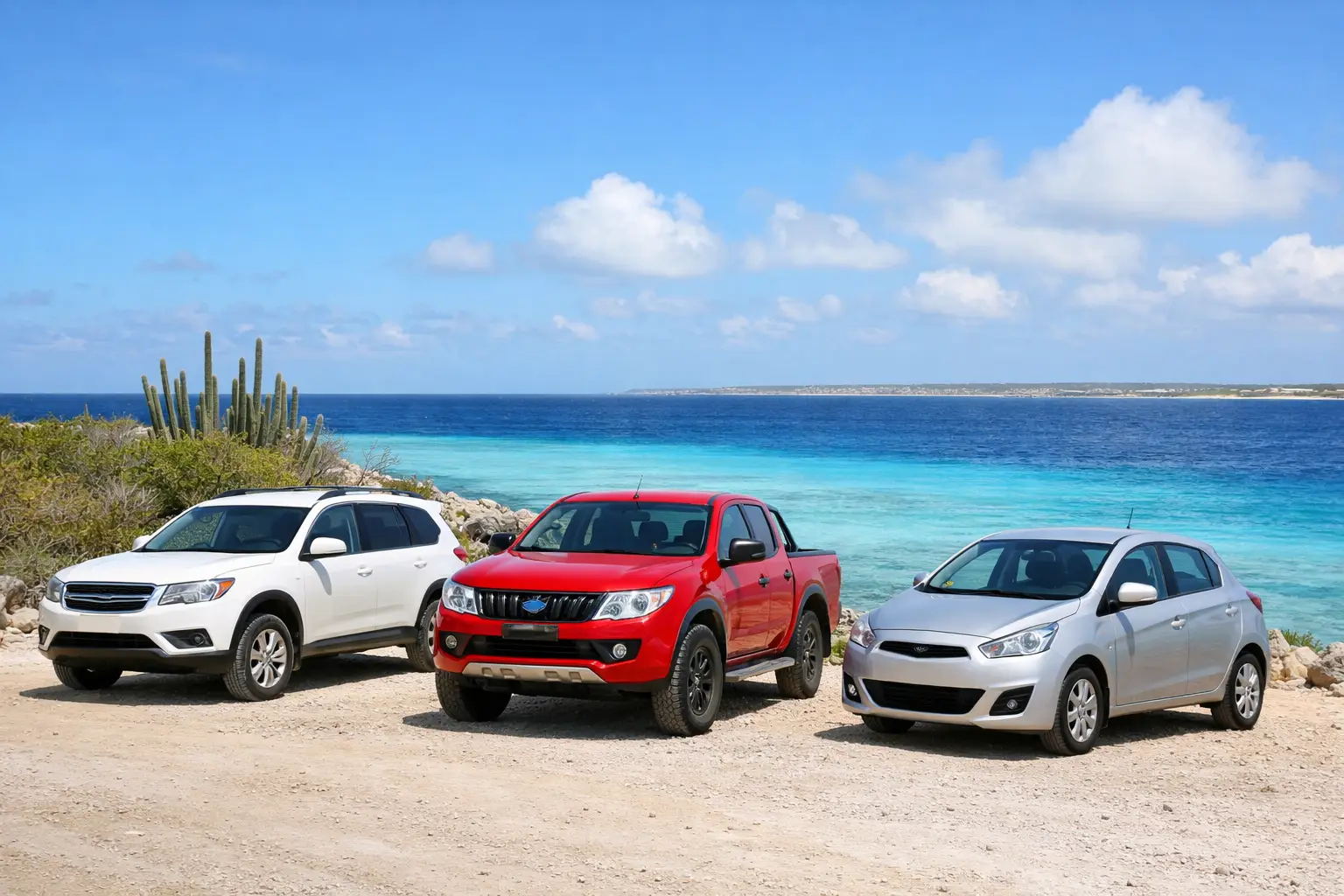
Many visitors mix it: a scooter for easy days, and a truck or SUV for adventure days. If you prefer one rental for the whole trip, choose based on the most demanding day you have planned. It’s better to be slightly “over-vehicle’d” for a few simple drives than under-equipped for the day you really care about.
If you’d like one place to keep it simple – scooters, trucks, and everything in between – our family team at Caribe Car Rental Bonaire helps travelers match the vehicle to their real plan, not just the cheapest category on paper.
Timing and availability: when to reserve
Bonaire has seasons where the island feels very booked-up, especially around holiday weeks and popular travel windows. Scooters can go quickly because there are fewer of them than cars. If your dates are fixed and you know you want two wheels, reserve earlier than you think you need to.
If you’re flexible, you can sometimes book closer in. Just remember that the best choice is the one that fits your trip. Waiting too long can force you into “whatever is left,” and that’s when people end up with a scooter that’s too small, too uncomfortable, or simply not ideal for their routes.
The real key to enjoying a scooter on Bonaire
A scooter makes Bonaire feel open. You smell the sea, you notice the colors, and you’re never rushing to find parking. The key is to keep your routes realistic, respect the wind, and choose a ride that matches your most important days.
If you do that, you’ll spend less time thinking about transportation and more time doing what you came for: picking the next stop because it looks good from the road, not because it’s the only one you can reach.

 NL
NL  EN
EN  EN_CA
EN_CA